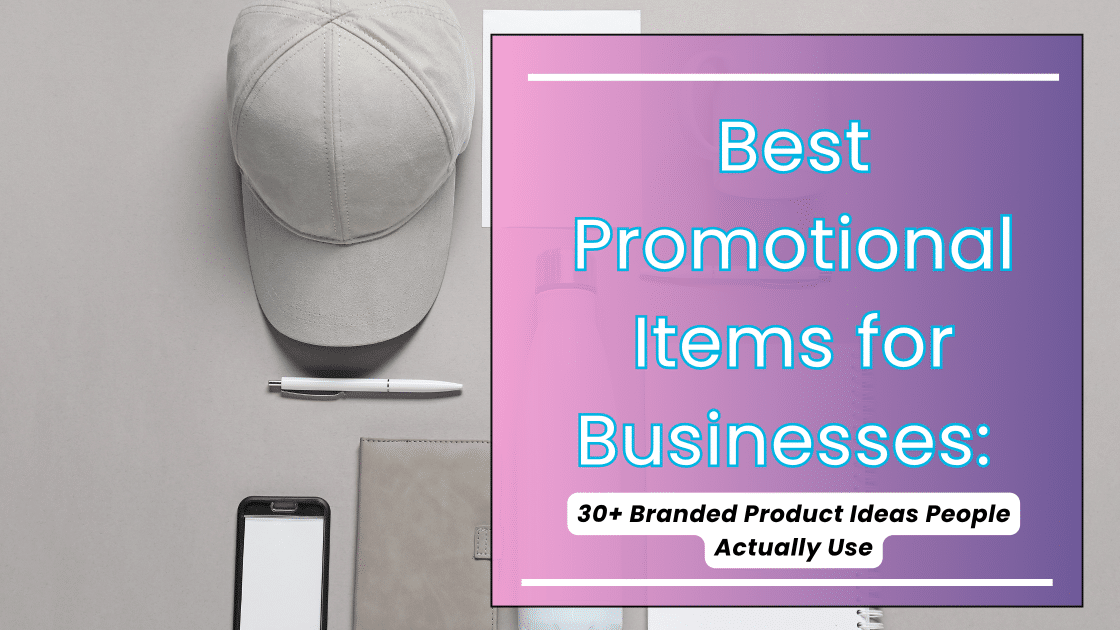
The best promotional items for businesses are useful, relevant to the recipient, appropriate for the setting, and designed well enough that people actually want to keep them. Drinkware, bags, apparel, notebooks, tech accessories, event giveaways, and curated gifts can all work. The right choice depends on who will receive the product, how it will be distributed, and what the merchandise needs to accomplish.
That is an important distinction. A product does not become effective simply because a company logo is printed on it. The strongest promotional products fit naturally into the recipient’s day, the event experience, or the relationship between the recipient and the brand.
For businesses comparing promotional product ideas, the better question is not What can we put our logo on? It is What would this audience actually want to receive?
What Makes a Promotional Product Worth Giving?
A strong promotional product balances usefulness, quality, relevance, design, and context.
Recent PPAI Research on why consumers keep branded merchandise reinforces the importance of that approach. In its 2026 consumer research involving more than 3,400 U.S. consumers, usefulness was the leading reason recipients reported keeping branded merchandise, followed by factors such as quality. Lack of usefulness was also the leading reason for discarding it.
That means product selection should begin before a catalog is opened.
Consider:
- Usefulness: Is there a realistic reason the recipient will use it?
- Audience fit: Does the item make sense for this particular group?
- Context: Where, when, and why will it be distributed?
- Design: Would the product still be appealing if the logo were smaller?
- Perceived value: Does it feel appropriate for the relationship or occasion?
- Practicality: Can it be stored, transported, distributed, and executed within the project’s requirements?
- Brand fit: Does the product feel connected to the organization rather than selected at random?
The best promotional products do not need to be the most expensive. They need to make sense.
30+ Best Promotional Products for Businesses
There is no universal product that works for every audience. The following categories provide a practical starting point based on how, where, and why the merchandise will be used.
Everyday Promotional Items
Products tied to an existing routine have a clear advantage: recipients already understand what to do with them.
1. Reusable Tumblers
Tumblers can work for employees, clients, conferences, travel programs, gifts, and general brand merchandise. Focus on usability and design rather than treating every available surface as advertising space.
2. Reusable Water Bottles
Water bottles are a natural fit for workplaces, outdoor events, wellness programs, sports, conferences, retreats, and travel-oriented audiences.
3. Coffee Mugs
Mugs can work well in offices, employee packages, client gifts, hospitality settings, and remote-work programs. Artwork or packaging can help a familiar product feel more intentional.
4. Tote Bags
Tote bags are particularly useful for conferences, retail activations, community events, gifting, and programs where recipients need to carry other materials.
They can also become a more creative piece of merchandise when the design is something people would willingly carry beyond the original event. JNP’s guide to using branded tote bags in a marketing strategy explores additional applications.
5. Notebooks and Journals
Branded notebooks fit naturally into conferences, meetings, onboarding kits, training programs, client gifts, and workplaces. Pairing a notebook with a writing instrument can create a simple coordinated set.
6. Pens and Writing Instruments
Pens remain easy to distribute and useful across a wide range of business settings. A mass-distribution pen and a premium writing instrument, however, serve very different purposes. Match the product to the recipient and occasion.
7. Desk Accessories
Desk organizers and useful workplace accessories can make sense for employees, professional-service clients, conferences, and office-based audiences.
8. Phone Stands
Phone stands can be practical for desks, remote work, travel, and technology-oriented events, particularly when recipients frequently use their phones for video calls or reference.
9. Charging Accessories
Portable charging and related tech accessories can suit travel, conferences, employee programs, and technology-focused audiences. Specific compatibility and product requirements should always be reviewed before selecting an item.
10. Travel and Accessory Pouches
Small pouches can organize chargers, toiletries, cosmetics, office supplies, or other essentials. That flexibility makes them useful for conferences, retreats, travel programs, and merchandise kits.
Promotional Apparel People May Actually Want to Wear
Branded apparel has strong creative potential, but apparel also makes one principle obvious: people will not wear something simply because a business wants visibility.
The design has to work as clothing first.
11. Custom T-Shirts
T-shirts can support events, teams, launches, community programs, employee initiatives, and limited merchandise collections.
Instead of automatically placing a large company logo across the front, consider artwork that connects to the event, campaign, audience, or identity of the organization.
12. Polo Shirts
Polos can be appropriate for staff, hospitality teams, conferences, sales groups, and professional environments where a more structured look is useful.
13. Hoodies and Sweatshirts
Hoodies can carry greater perceived value than a basic giveaway and work well for employees, retreats, campus programs, merchandise drops, and cooler-weather events.
14. Jackets and Outerwear
Outerwear may be appropriate for employee recognition, outdoor teams, travel programs, leadership gifts, or premium merchandise programs. Sizing and distribution deserve additional planning when apparel becomes more substantial.
15. Hats and Headwear
Caps, beanies, and other headwear can fit sports, outdoor events, employee merchandise, hospitality, lifestyle brands, and casual corporate programs.
16. Custom Socks
Socks provide room for patterns, colors, icons, and less conventional branding. They can work for employee programs, sports, conferences, gift kits, retreats, and brands that want an alternative to another T-shirt.
Best Promotional Items to Give Away at Events
The best promotional items to give away are not necessarily the largest or most expensive. At an event, distribution changes the equation.
An attendee may need to carry the item for several hours, fit it into a bag, take it onto an airplane, or manage it alongside materials from dozens of other exhibitors.
Compact, useful products often perform better in that environment.
17. Stickers
Stickers can work for brands with a strong visual identity, community-focused organizations, technology companies, creators, schools, and events. The design needs to be appealing enough that the recipient actually wants to use it.
18. Pocket Notebooks
Small notebooks are easy to distribute and can be useful immediately during sessions, meetings, demonstrations, or travel.
19. Compact Tech Accessories
Cable organizers, small screen-related accessories, and other practical tech items can work well for office and conference audiences when the function is obvious and relevant.
20. Umbrellas
Umbrellas may suit outdoor events, hospitality programs, real estate, travel, and certain client-gifting situations. Their size makes storage and distribution an important consideration.
21. Luggage Tags
Luggage tags are particularly relevant to conferences, retreats, incentive travel, hospitality programs, and events that involve attendees traveling from multiple markets.
22. Lunch Bags and Coolers
Lunch and cooler-style bags can suit employee programs, outdoor events, sports, travel, food-related campaigns, and appreciation gifts.
The common thread is context. The product should fit what the audience is doing.
Best Promotional Products for Trade Shows
The best promotional products for trade shows are portable, easy to distribute, relevant to the audience, and connected to the purpose of the booth.
Businesses should also consider whether every visitor needs to receive the same item.
A tiered approach may make more sense:
- General booth visitors: Compact, easily distributed promotional items
- Engaged prospects: A more useful or higher-value item
- Scheduled meetings: Merchandise connected to the conversation or campaign
- VIPs and important clients: A more substantial gift or curated set
- Speakers or partners: Recipient-specific merchandise
This prevents a business from using its entire merchandise budget to distribute the same product indiscriminately.
The giveaway should also support the broader event strategy. JNP’s guide to building a stronger trade-show giveaway strategy discusses how audience relevance, distribution, booth engagement, and follow-up can work together.
Best Promotional Items for Small Businesses
Small businesses do not need a huge assortment of promotional items.
A focused merchandise program can often be more coherent than buying several unrelated products simply because they are inexpensive.
Useful options include:
23. Reusable Shopping Bags
Retailers, markets, food businesses, community organizations, and businesses where customers regularly carry purchases can make the bag part of the customer experience.
24. Branded Notepads
Notepads can be useful for professional services, real estate, home services, offices, and other businesses whose customers may keep them near a desk or phone.
25. Magnets
Magnets can make sense when customers have a practical reason to keep company information visible, particularly for certain service businesses or community organizations.
26. Staff Apparel
Staff T-shirts, polos, hats, or outerwear can help create a consistent appearance at stores, events, jobsites, activations, and other customer-facing environments.
27. Customer Appreciation Gifts
Instead of spreading a budget across a large number of inexpensive objects, a small business may decide that fewer, more thoughtful gifts are appropriate for important customers or relationships.
JNP’s article on personalized gifts for client relationships provides a useful next step for businesses exploring that approach.
Creative and Unique Promotional Product Ideas
Creative merchandise does not require finding the strangest object in a catalog.
Often, the strongest innovative promotional product ideas come from improving the concept, presentation, personalization, or distribution surrounding a familiar product.
28. Curated Gift Sets
Combine complementary products around one clear idea.
Possible themes include:
- Travel
- Coffee
- New-hire onboarding
- Conferences
- Wellness
- Client appreciation
- Employee recognition
- Event survival
- Seasonal gifting
A smaller collection of products that makes sense together can feel more intentional than a box filled with unrelated merchandise.
29. Custom Packaging
Packaging can change the way familiar products are experienced.
Boxes, inserts, tissue, cards, labels, and presentation details can connect separate items into one cohesive gift or campaign. JNP’s current custom packaging and unboxing experience services illustrate how packaging can become part of the merchandise concept itself.
30. Personalized Merchandise
Personalization can shift attention toward the recipient rather than the company. Depending on the product and project, names, roles, event details, or other individual elements may create a more personal experience.
Availability and execution will depend on the particular merchandise, quantity, customization requirements, and timeline.
31. Limited-Edition Merchandise
A defined merchandise collection can make sense for launches, milestones, events, employees, communities, or loyal customers.
The value comes from having a real concept behind the collection rather than labeling ordinary merchandise exclusive. JNP’s guide to planning limited-edition corporate merch drops explores this strategy in more detail.
32. Campaign-Specific Merchandise
Sometimes the most creative choice is a familiar product designed specifically around the campaign.
Color, typography, artwork, packaging, copy, product combination, and distribution can all make a standard category feel original.
Creativity should come from relevance, not novelty for novelty’s sake.
Best Inexpensive Promotional Items
The best inexpensive promotional items are low-cost products that still have a clear reason to exist.
Depending on the audience and program, options may include:
- Pens
- Stickers
- Notepads
- Magnets
- Simple tote bags
- Small office accessories
- Compact event items
Budget should be considered alongside distribution.
If a company needs merchandise for a very large audience, unit cost naturally becomes more important. A smaller group of high-value clients, employees, or prospects may justify investing the same overall budget in fewer, more substantial products.
Do not start by asking, What is the cheapest item available?
Start with:
What is the most appropriate product we can deliver within this project’s budget?
Premium Promotional Products for Clients, Employees, and VIPs
Not every promotional product is a giveaway.
Some merchandise functions more like a gift and should be selected accordingly.
Premium categories can include:
33. Premium Drinkware
A substantial drinkware piece can serve as a standalone client or employee gift or become the anchor of a larger set.
34. Travel Bags and Duffels
Travel-oriented bags can fit retreats, executive programs, incentive travel, conferences, teams, and recipients who frequently travel.
35. Premium Apparel and Outerwear
Apparel can become recognition merchandise or a higher-value gift when the product, fit, design, and recipient relationship justify it.
36. Curated Client Gift Boxes
A coordinated gift box allows product selection, packaging, presentation, and messaging to work together rather than treating each item separately.
For higher-value gifting, restraint often improves the experience. A recipient does not necessarily need six products when two excellent ones would make a stronger gift.
How to Choose the Best Promotional Products for Your Audience
A better merchandise decision usually begins with six questions.
1. Who Is Receiving It?
Customers is too broad.
Are they:
- Conference attendees?
- Long-term clients?
- New employees?
- Sales prospects?
- Executives?
- College students?
- Event VIPs?
- Construction professionals?
- Remote employees?
- Community members?
The more specific the audience, the easier the product decision becomes.
2. What Is the Merchandise Supposed to Accomplish?
Clarify the objective.
For example:
- Provide an event takeaway
- Welcome an employee
- Thank a client
- Support a product launch
- Equip staff
- Recognize a milestone
- Create a memorable event moment
- Give attendees something useful
- Build a coordinated merchandise collection
Different objectives call for different products.
3. Where Will the Product Be Distributed?
An item handed out at a booth has different requirements from a gift mailed directly to an executive.
Consider:
- Portability
- Storage
- Shipping
- Venue restrictions
- Travel
- Distribution speed
- Packaging
- Whether the recipient needs to carry it immediately
A strong idea on paper can become inconvenient if distribution is ignored.
4. Would Someone Use It Without the Logo?
This is a useful test.
If the only appealing quality is that the business name appears on it, reconsider the item or rethink the design.
Branding should support the product instead of overwhelming it.
5. Does the Value Match the Relationship?
A mass giveaway, employee anniversary gift, conference speaker gift, sales prospect item, and VIP client package should not automatically receive the same merchandise.
Create tiers when the program calls for them.
6. Can the Idea Be Executed Properly?
Before finalizing a product, consider:
- Quantity
- Artwork
- Decoration requirements
- Personalization
- Packaging
- Shipping
- Storage
- Distribution
- Inventory
- Production requirements
- Event or campaign deadline
Commercial details vary by product, supplier, quantity, decoration, customization, and schedule. Confirm those factors before committing to a campaign.
Common Promotional Product Mistakes to Avoid
Choosing Something Only Because It Is Cheap
Low price does not create value if recipients do not want the product.
Making the Logo the Entire Design
Brand visibility does not require maximizing logo size. Sometimes an icon, phrase, pattern, event-specific graphic, or more restrained treatment creates merchandise people are more willing to use.
Ignoring the Audience
A useful product can still be wrong for a particular group.
Giving Everyone the Same Thing
Different audiences may justify different merchandise tiers, especially at conferences, employee programs, and client events.
Buying Too Many Products
A smaller, coordinated assortment can be clearer and more memorable than a collection of unrelated items.
Forgetting About Distribution
Size, weight, packaging, travel, storage, and shipping can affect the success of a merchandise program as much as the product itself.
Promotional Product FAQs
What Are the Most Effective Promotional Products?
The most effective promotional products are useful, relevant to the recipient, and appropriate for the situation in which they are given. Drinkware, bags, apparel, notebooks, tech accessories, and gifts can all work, but no category is universally best. Start with the audience and purpose, then select the product.
What Are the Best Promotional Items to Give Away?
For broad distribution, the best promotional items are usually easy to carry, useful, and simple to distribute. Pens, notebooks, bags, stickers, and compact accessories may work for large audiences, while drinkware, apparel, gift sets, and more substantial items may fit smaller or higher-value groups.
How Much Should a Business Spend on Promotional Products?
There is no universal promotional-product budget. Appropriate spending depends on the number of recipients, the value of the relationship, product type, customization, packaging, shipping, distribution, and the purpose of the campaign. Set a total project budget first, then decide where higher-value merchandise is justified.
How Much Branding Should Go on a Promotional Product?
Use enough branding to connect the product to the organization without making the merchandise unpleasant to use or wear. The appropriate treatment depends on the item and creative concept. A prominent logo may make sense for staff apparel, while a client gift may benefit from a more restrained approach.
How Far in Advance Should Promotional Products Be Ordered?
Timing varies by product, quantity, supplier, customization, decoration, packaging, inventory, shipping destination, and event deadline. Products requiring personalization, custom packaging, or more complex production may need additional planning. Confirm a project-specific timeline before committing to an event or campaign date.
Choose the Strategy Before the Product
The best promotional items do not begin with an object. They begin with an audience.
Define who will receive the merchandise, why they are receiving it, where the interaction will happen, what the brand should communicate, and what the recipient is likely to value. Product selection becomes much easier once those decisions are clear.
That approach also creates room for more creative merchandise. A tote can become event packaging. Apparel can become a collection rather than a uniform. A client gift can become an unboxing experience. A trade-show giveaway can be tied to a specific level of engagement rather than handed indiscriminately to everyone.
JNP Merchandising’s current services include promotional products, apparel, event merchandise, gifting, product sourcing, merchandise design, packaging, and custom concepts. Businesses developing a new merchandise program can explore JNP’s promotional products services and start with the audience, occasion, goals, quantity, budget, and timeline.
The product matters. The strategy that puts the right product in the right person’s hands matters more.