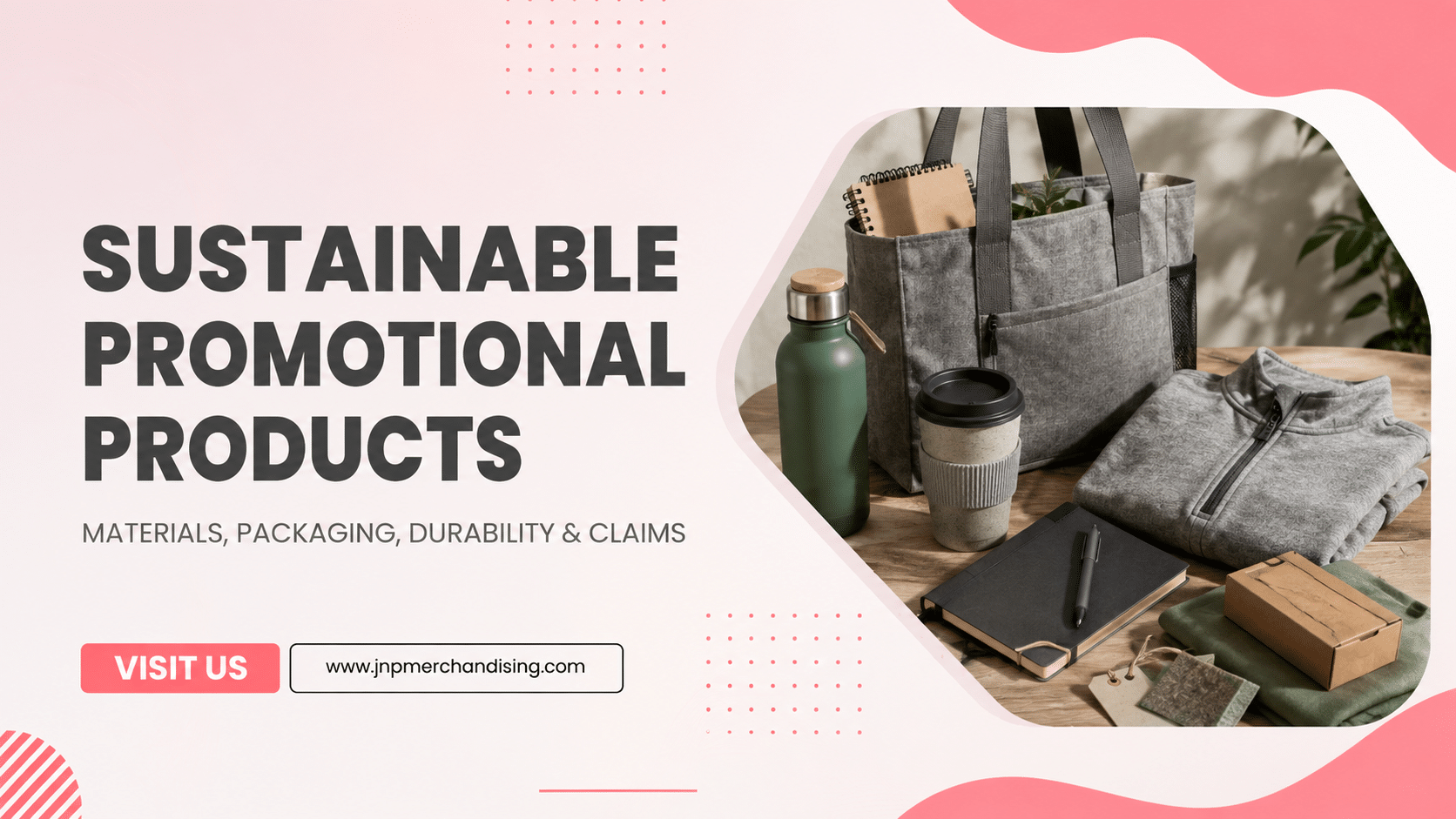
Sustainable promotional products should be evaluated with specific evidence, not broad labels. Materials matter, but so do durability, packaging, product usefulness, transportation, end-of-life options, and the accuracy of every environmental claim. A product that is kept and used can be a better brand choice than a novelty item promoted with vague green language.
Quick answer: Ask what the product and package are made from, what percentage of recycled content is verified, how the item is expected to be used, which certifications apply, and whether recycling or composting options are realistically available to recipients. Avoid unqualified claims such as green or eco-friendly. The Federal Trade Commission advises marketers to qualify environmental claims and support them with reliable evidence.
Begin With the Recipient and the Intended Use
A sustainable merchandise program still needs to serve a real audience. Start with the job the product must do. Is it for an employee program, conference, client gift, fundraising event, or broad giveaway? How long should it remain useful? Will recipients be able to carry, store, clean, or recharge it?
Usefulness is an important filter because unnecessary products consume budget and materials even when they contain recycled content. Ask:
- Will the recipient use this in daily life?
- Does it replace a less durable or single-use item?
- Is the product appropriate for the event and audience?
- Can the branding be subtle enough that the item remains desirable?
- Can quality, decoration, and delivery requirements be supported?
JNP’s promotional product program can help teams compare practical merchandise directions based on audience, objective, and production needs.
Evaluate Material Claims With Specific Questions
Material descriptions should identify what the claim actually means. Recycled, recyclable, compostable, renewable, and reusable are not interchangeable.
Recycled content
Ask whether the content is post-consumer or pre-consumer, which part of the product contains it, and what percentage is documented. A product may combine several materials, so a recycled shell does not necessarily describe the entire item.
Recyclable
Recyclability depends on the material, construction, and access to appropriate facilities. Mixed materials, coatings, adhesives, batteries, and decoration can affect the end-of-life path. The FTC explains that recyclable claims may need qualification when appropriate facilities are not available to a substantial majority of consumers or communities.
Compostable or biodegradable
Ask whether the claim applies to the product, packaging, or one component and whether a specific facility or environment is required. The FTC states that compostable claims need competent and reliable scientific evidence and may require qualification when suitable facilities are not widely available.
Renewable or plant-based
Identify the renewable material, the amount used, and whether the claim implies other benefits that have not been established. Plant-based content does not automatically mean recyclable, compostable, or lower impact in every situation.
For the legal framework behind U.S. environmental marketing, review the FTC’s Environmental Claims summary.
Look for Evidence Behind Certifications and Seals
A certification or seal should identify the organization, the standard, the product attribute covered, and whether the certification is independent. A symbol without context can create a broader impression than the evidence supports.
Request:
- the full certification name
- the standard or criteria used
- the product or component covered
- the current certificate or documentation
- any limits on how the claim may be described
Do not convert a narrow certification into a broad environmental promise. The FTC notes that third-party certification does not remove the marketer’s responsibility to substantiate express and implied claims.
Prioritize Durability, Repairability, and Repeat Use
Durability is a practical sustainability consideration. A reusable bottle that leaks, a tote that tears, or a charger that fails quickly will not support the program’s goals.
Evaluate:
- material strength and finish
- expected frequency of use
- cleaning and care requirements
- replaceable parts or batteries
- warranty or supplier support when applicable
- decoration durability
Choose products that fit the recipient’s routine. The most responsible product is not always the one with the longest list of environmental terms. It may be the one people keep, use, and do not need to replace quickly.
Audit the Packaging as Carefully as the Product
Packaging can protect the merchandise and create a strong presentation, but unnecessary volume and mixed materials can work against the program’s stated goals.
Review:
- right-sized boxes or mailers
- protective material actually needed for damage prevention
- recycled-content documentation
- single-material packaging where practical
- clear disposal or recycling instructions
- ink, coating, adhesive, magnet, and laminate choices
- whether the package has a useful second life
Reducing damage also matters. Packaging that is slightly more protective may prevent the greater waste of replacing a broken product. JNP’s custom packaging guide explains how presentation choices affect the recipient experience.
Consider Shipping and Distribution
Product weight, package size, delivery distance, multi-address fulfillment, and rush freight all affect the program. A lightweight product can be helpful for conferences and remote teams, but it still needs to be durable and useful.
Plan early enough to avoid unnecessary rush decisions. Consolidate components when appropriate, validate addresses, and choose packaging that fits the product. For international programs, confirm destination-specific restrictions and documentation before final product approval.
Create an Environmental Claim Review
Before a claim appears in a proposal, insert, web page, event sign, or social post, document the evidence and the exact wording that can be supported.
| Claim | Evidence to request | Question to answer |
|---|---|---|
| Recycled content | Percentage and source documentation | Which component contains how much? |
| Recyclable | Material and facility requirements | Can recipients realistically recycle it? |
| Compostable | Testing, conditions, and facility needs | Where and how will it break down? |
| Reusable | Durability and intended use | Is repeat use realistic for this audience? |
| Certified | Issuer, standard, scope, current certificate | What does the seal actually verify? |
Use qualified, plain-language descriptions. For example, stating a documented percentage of recycled content is more useful than calling the entire product earth-friendly.
Build a Product Evaluation Scorecard
Score finalist products against the same factors:
- Audience relevance: Is it useful to the intended recipient?
- Durability: Is the item likely to remain functional?
- Material evidence: Are the claims specific and documented?
- Packaging: Is it protective, right-sized, and clearly described?
- Distribution: Does it fit the delivery model?
- Branding: Will decoration support continued use?
- End of life: Are disposal, recycling, or take-back options realistic?
Document tradeoffs instead of looking for a perfect product. A buyer may choose a more durable item with simpler packaging, or a lower-impact material with limited decoration. The decision should be transparent and connected to the campaign’s priorities.
Frequently Asked Questions
What makes a promotional product sustainable?
No single attribute proves that a product is sustainable. Evaluate usefulness, durability, materials, packaging, shipping, end-of-life options, and the evidence supporting environmental claims.
Can a product be called eco-friendly?
The FTC advises against broad, unqualified general environmental benefit claims. Use specific, substantiated descriptions and explain the relevant limitation or attribute.
Is recycled material always recyclable?
No. Recycled content describes where material came from, while recyclable describes a potential end-of-life pathway. Product construction and local facility availability affect whether recycling is realistic.
Should packaging be eliminated?
Not when packaging is necessary to protect the product. Instead, right-size it, reduce unnecessary components, choose materials deliberately, and provide accurate disposal information.
How should buyers compare sustainable product options?
Use the same written scorecard for each option and request documentation for every claim. Include recipient usefulness, product durability, packaging, distribution, and end-of-life considerations.
Choose Products With Evidence, Not Buzzwords
A credible program uses specific claims, practical products, appropriate packaging, and transparent tradeoffs. That approach is better for recipients and protects the brand from unsupported environmental promises.
Ask JNP to help evaluate promotional product options based on your audience, quantity, budget, delivery plan, and environmental priorities. You can also review JNP’s promotional products and real project portfolio.