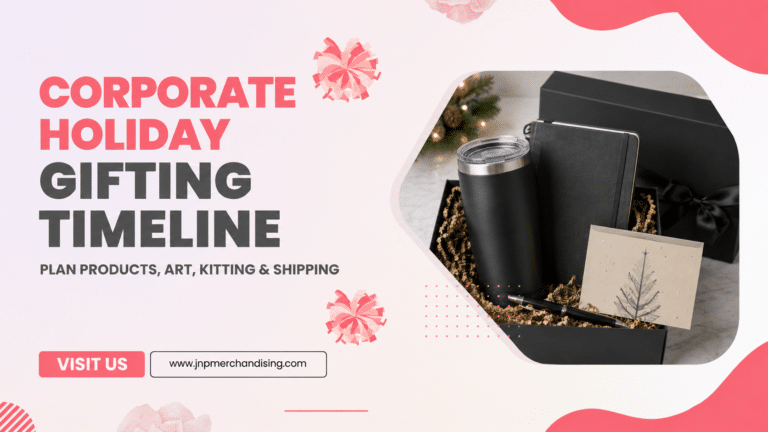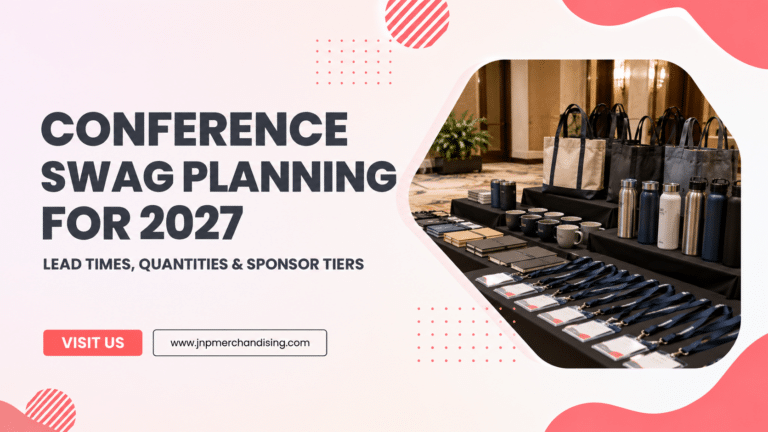
The best employee gifts under $100 fit a real routine: a useful drinkware piece, a notebook and pen, a travel organizer, a comfortable throw, or a small, coordinated gift set. Start with the recipient, then confirm whether your limit includes customization, packaging, assembly, tax, and shipping. A thoughtful note and suitable product matter more than filling a box.
For HR teams, executive assistants, and procurement buyers, the challenge is choosing something personal enough to feel considered and practical enough to order for a whole team. The categories below are sourcing directions, not a priced JNP catalog. Availability and the final cost depend on the selected product, quantity, decoration, and delivery requirements.
Set an all-in budget before selecting employee gifts
First decide what “under $100” means for your program. A $100 product allowance is different from a $100 delivered-gift limit. Request an itemized proposal rather than assuming a catalog price covers the completed experience.
- Product and decoration: include the item, setup charges, imprint locations, and individual names when applicable.
- Presentation: account for a card, protective packaging, and any branded sleeve or box.
- Assembly and delivery: include packing labor and either bulk freight or individual shipments.
- Other costs: confirm applicable tax, sample charges, and an allowance for changes or replacements.
For example, if your approved delivered limit is $100 and the confirmed non-product costs total $25 per recipient, the product allowance is $75. This is an illustrative calculation, not JNP pricing. If the quote exceeds the limit, simplify the assortment or packaging before reducing the usefulness of the main gift. Our branded merchandise budgeting guide explains the broader cost categories.
10 thoughtful employee gift ideas to explore under $100
Ask for options that fit the remaining product allowance. None of these categories guarantees that every model, personalization choice, or gift combination will meet your budget.
1. Drinkware matched to the workday
A desk mug, travel tumbler, or bottle can suit different routines. Compare capacity, lid design, weight, cleaning instructions, and decoration durability before choosing. A commuter may value a secure lid more than an oversized design; someone working at a desk may prefer a comfortable handle.
2. A notebook and writing-instrument pair
Choose a notebook format people can comfortably carry and a pen they would want to use. Check paper layout, binding, refill availability, and the finished decoration. Initials or a short message can feel more personal than a large cover logo. JNP’s personalized office products offer a relevant starting point for a team brief.
3. A cable or travel organizer
Consider this for employees moving between offices, client visits, and home. Check whether the compartments fit the accessories people actually carry. An empty, well-designed pouch may be more useful than a bundle of cables incompatible with their devices.
4. A tote or everyday bag
Match the bag to its job: carrying lunch, meeting materials, or daily essentials. Review handle comfort, closure, dimensions, and the actual sample. Avoid assuming that a lightweight giveaway tote will suit a heavy commuting load.
5. A soft throw for home use
A throw can work for a home-focused thank-you. Check the dimensions, fabric feel, care instructions, and packed size. Shipping and presentation can affect the total substantially, so compare the complete package rather than the item alone.
6. A compact tech accessory
A charging accessory or small speaker may appeal to some teams. Confirm device compatibility, included cables or adapters, manufacturer documentation, and support arrangements. Do not describe an accessory as universally compatible or promise performance that its specifications do not support.
7. A desk accessory with understated personalization
A desk mat, organizer, or nameplate can make sense when employees have a consistent workspace. Check available space and whether the design suits both home and office settings. Keep individual names accurate and obtain a proof before approving production.
8. A coffee or tea break set
A mug paired with a suitable packaged beverage can create a focused gift without excessive filler. Offer a relevant alternative rather than assuming everyone drinks coffee. Confirm ingredients, storage needs, and the delivery conditions for the specific assortment.
9. A snack gift with an alternative
Packaged food can be suitable when recipient preferences and restrictions are addressed. Review the actual labels and supplier information; do not infer that an assortment is allergen-free, vegan, kosher, or gluten-free. Provide a non-food option when the available products cannot meet a recipient’s needs.
10. One useful item with a personal recognition note
A single carefully chosen item is a valid gift. Pair it with a message naming a contribution or milestone instead of adding unrelated extras. If employees have very different preferences, offer a small selection of comparable options and set a clear response deadline.
Personalize the experience without complicating the order
Start with the message. Explain what you appreciate and why the recipient is receiving the gift. Then decide whether individual names, team-specific cards, or a shared design add enough value to justify the additional coordination.
Use a controlled recipient list and appoint one person to approve spelling, artwork, and version assignments. Compare the proof with the actual decoration area. A subtle mark on the item and a stronger brand presence on the card can keep the gift recipient-first.
Keep the choice process manageable. Two or three suitable options may be easier to administer than an unrestricted catalog. Ask how substitutions, missed response deadlines, and late additions would be handled before announcing the program.
Make wellness, sustainability, and experience choices carefully
Comfort-oriented gifts should not make medical promises. A journal or quiet-break item can be offered as a preference, not a treatment for stress or a guarantee of better sleep. Avoid supplements, strongly scented products, or specialized wellness equipment unless they are appropriate for the recipients and the program.
For environmental claims, request evidence for the particular product and packaging. The FTC’s Green Guides summary cautions against broad, unqualified claims such as “eco-friendly.” A reusable item is not automatically proof of an overall environmental benefit. Describe verified material attributes specifically rather than repeating a supplier’s vague label.
Experience vouchers are another option for an employer to evaluate, but confirm location access, expiration dates, booking requirements, and any recipient costs. Do not assume JNP supplies a particular experience. A merchandise brief and an employer-arranged experience can remain separate parts of the recognition plan.
Plan bulk and remote-team delivery before approval
A single office delivery and individual home shipments need different budgets and packing plans. Confirm destination counts before committing to a gift, especially for bulky or fragile items. Collect only the recipient information needed, restrict access, and agree on how address corrections will be managed.
JNP’s kitting and multi-address shipping programs provide a place to discuss the products, recipient versions, packaging, and delivery requirements together. Scope and availability should be confirmed in the proposal. For seasonal orders, use the existing holiday gifting timeline rather than relying on a fixed turnaround promise.
Employee gifting questions buyers ask
Can a personalized employee gift stay under $100?
It may, depending on the item, quantity, decoration, and delivery scope. Share the complete budget limit, not just the target product price. Ask for alternatives if individual personalization would push the finished gift beyond that limit.
Should every employee receive the same gift?
Not necessarily. A consistent budget and recognition message can coexist with a small choice of products. Keep the alternatives comparable and explain the selection process clearly, particularly when employees work in different locations.
Is one premium item better than a gift box?
Choose according to recipient usefulness and the full cost. A coordinated set works when its pieces serve a shared purpose. If most of the spend goes into packaging or filler, a stronger single item with a personal note may be the better brief.
What should we include in a quote request?
Provide recipient count, occasion, total budget, required arrival date, delivery locations, preferred categories, artwork, and personalization requirements. Flag any dietary or product restrictions. These details help the team evaluate realistic options instead of guessing your scope.
Build an employee gift program around your team
JNP Merchandising’s custom corporate gifting services cover product selection and branded gift-box planning. Bring a clear recipient brief and an all-in budget so the conversation starts with suitable choices rather than an oversized product list.
Discuss your employee gifting program with the quantity, budget ceiling, occasion, and delivery needs. Keep the gift useful, the message personal, and every commercial detail confirmed before approval.