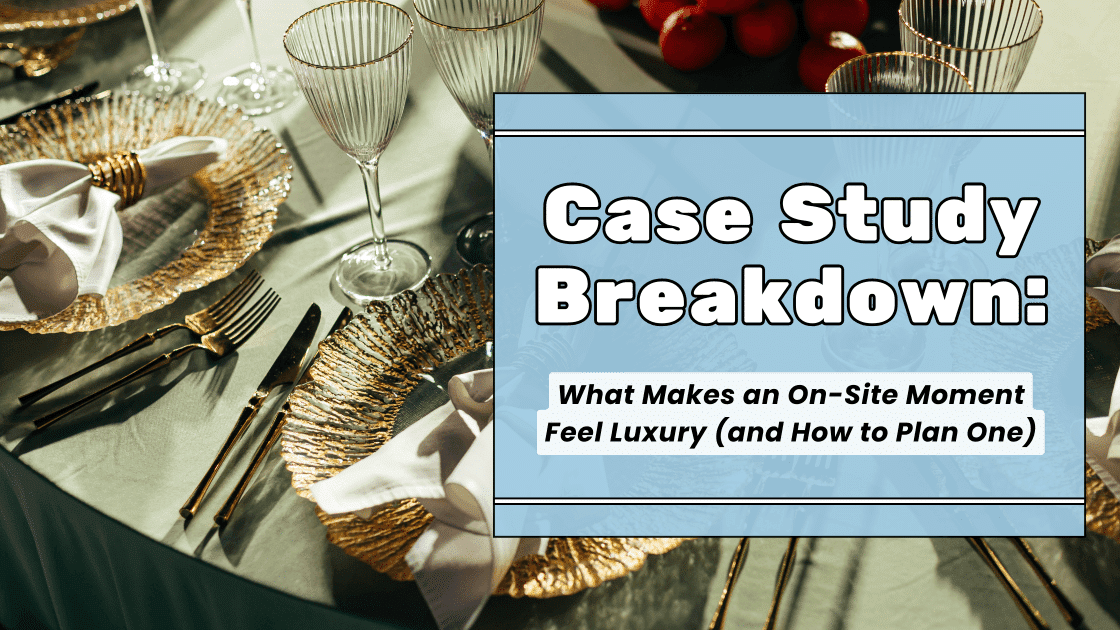
Luxury at an event is rarely about the highest price tag in the room. It is about the moment when a guest walks up, is guided, makes a choice, and leaves with something that feels like it was meant for them.
That matters more than ever, as customer experience has become such a strong driver of purchase decisions across industries.
If your on-site activation feels chaotic, overdesigned, or transactional, even a beautiful product can lose its shine. But when every detail is edited well, the whole thing lands differently, and that is where the real magic starts.
What “Luxury” Means in Event Merch (It’s Not Just Price)
A luxury on-site moment is not about stuffing the table with expensive items and hoping people are impressed.
It is about restraint.
It is about showing a guest that someone thought this through. The product feels premium. The setup feels clean. The team sounds polished. The options feel intentional. The handoff feels smooth. Nothing looks random, rushed, or crowded.
That is why the best luxury activations usually share one trait: they remove friction before the guest ever notices it. The line moves, but no one feels hurried. The branding is visible, but never screaming. The personalization feels custom, but the choices are edited enough to keep the process elegant.
A good rule here is simple: luxury feels easy for the guest because the brand did the hard part in advance.
If you are planning a premium activation, build it with the same experience-first mindset you see in PwC’s research on customer experience and the attendee-focused thinking behind Cvent’s event personalization guidance. Guests remember how seen they felt just as much as what they received.
The 5 Elements of a Luxury On-Site Moment
If we were breaking down the anatomy of a premium activation, these are the five ingredients we would protect first:
- Curated product
Not ten random items. One to three excellent ones. - Premium personalization
Personal touches that feel elevated, not gimmicky. - Elegant setup
Materials, signage, spacing, and lighting all work together. - High-touch service
The staff experience should feel concierge-level, not transactional. - Flawless logistics
The guest should never feel the backend stress.
Here is the truth people in events learn fast: guests do not separate the merch from the moment. They judge the entire scene as one experience. If the personalization is beautiful but the queue is awkward, the luxury feeling drops. If the product is premium but tossed into weak packaging, the moment loses lift. If the setup is gorgeous but the staff looks unsure, the confidence disappears.
Luxury is cumulative. It is built through a stack of small right decisions.
Product Selection: Items That Feel Worth Personalizing
Not every item deserves the ceremony of live personalization.
That is the first filter.
If you are asking a guest to stop, choose, wait, and engage, the finished piece should feel worth that time. The strongest luxury picks usually fall into one of three buckets:
- wearable items with real after-event life
- display-worthy keepsakes
- soft goods that feel surprisingly elevated in person
That is why premium hats, heavyweight apparel, leather accessories, structured totes, and well-made textiles perform so well. They have presence. They feel giftable. They photograph nicely. Most importantly, they feel like something a guest would actually keep.
For sports hospitality, alumni, or VIP sideline moments, elevated custom football towels can feel far more premium than people expect when the material, stitch detail, and presentation are handled correctly. In lounge environments, wellness gifting, or hospitality suites, custom pillows for events can create that same “wait, this is actually so chic” reaction.
And if you want a reminder that celebratory merch can still feel polished and personal, our Wesleyan championship merch project is a great example of how emotion, personalization, and presentation can work together.
Pro tip: before approving the item, ask one question:
Would this still feel special if the logo were tiny?
If the answer is no, it probably is not luxury. It is just branded.
Experience Design: Queue, Service Script, and Packaging Reveal
Let’s say you are planning a 250-person evening event with a 90-minute activation window. This is where brands usually make or break the feeling.
The queue cannot feel like a queue.
You want soft control, not visible crowding. That might mean a host who welcomes guests before they reach the station, a small display that previews the options, and a service flow that lets people decide before they hit the personalization point. In luxury, dead time is dangerous. Guests should always feel guided.
Your service script matters too. Staff should sound warm, informed, and concise. Not robotic. Not overly salesy.
A strong service flow might look like this:
- Welcome the guest and explain the activation in one sentence.
- Present the curated options.
- Confirm the personalization choice cleanly.
- Give a realistic timing cue.
- Deliver the item with a reveal moment, not just a handoff.
That final step matters more than people think. A box opening, dust bag pull, tissue fold, or ribbon lift changes the emotional finish. Packaging is not a side detail. It is part of the reveal. That is one reason GS1 US’s packaging guidance is so useful to study even outside retail. The way something is presented shapes how people value it.
Setup Aesthetics: Signage, Materials, and Brand Restraint
If you want the activation to feel premium, edit the environment first.
Luxury booths are almost never loud. They are composed.
That means:
- fewer signs
- better materials
- tighter color discipline
- more negative space
- cleaner surfaces
- one focal point per zone
Too many event setups confuse branding with volume. More logos. More copy. More colors. More props. More everything. But premium environments usually do the opposite. They reduce. They select. They let the product breathe.
Use signage to orient, not overwhelm. Choose one beautiful hero sign, one menu sign, and one discreet brand touch if needed. Anything beyond that should earn its place.
Color consistency matters here too. If your thread, print, packaging, table wrap, and signage all interpret the brand palette differently, the station instantly feels cheaper. That is exactly why teams working in print and physical production rely on Pantone’s color systems and tools like the Pantone Formula Guide when color accuracy actually matters.
Luxury is often the absence of visual panic.
Personalization Menu: Limited Choices That Still Feel Custom
One of the biggest mistakes in live personalization is offering too much.
Too many fonts. Too many placements. Too many thread colors. Too many decisions in public.
That does not feel luxurious. It feels like homework.
A better move is a tight, beautiful menu:
- 2 font options
- 1 to 3 placement options
- a restrained thread or imprint palette
- initials, short names, or monograms only
- clear examples shown upfront
This is where curation becomes the service. You are not taking away freedom. You are protecting the guest from choice fatigue and protecting the line from collapse. The logic lines up with what Nielsen Norman Group writes about simplicity and choice overload: more options raise the effort required to decide.
In practice, that means a guest still feels like the piece is theirs, but the system stays elegant.
The sweet spot is this: personal enough to feel custom, limited enough to stay graceful.
Throughput Without Feeling Rushed
Luxury does not mean slow.
It means controlled.
Before the event, calculate your realistic capacity per hour based on the exact personalization method. Then plan for a little less than that. Build breathing room into the schedule so your team is never operating in panic mode.
A few smart ways to keep throughput high without killing the vibe:
- create a pre-decision zone before the personalization station
- offer VIP appointment windows for key guests
- use runners to manage completed items
- batch similar personalization requests when possible
- set a clean cutoff policy for complex requests
- keep an overflow plan ready, such as later pickup or post-event shipping
One of the most premium things a brand can do is protect the guest from operational strain. If the station gets slammed, the answer should not be visible stress. It should be a graceful pivot.
That is the difference between an activation that looks expensive and one that actually feels premium.
Post-Event Extension: Turning the Moment Into Content
A luxury activation should not end when the guest walks away.
It should turn into content that keeps circulating.
The strongest teams plan for that early. Not as an afterthought. Build a shot list before the event. Capture the product close-up, the personalization in progress, the reveal, the guest reaction, and the styled final handoff. That gives you content for recap edits, short-form social, sponsor decks, and follow-up emails.
For platform-native content strategy, it helps to study how TikTok’s 2025 trend report talks about authentic creator partnerships and varied, behind-the-scenes storytelling, along with TikTok’s own creative best practices, which explicitly favor content that feels less overly polished and more human.
One important note: if creators, influencers, or gifted partners are posting from the activation, make sure your team follows FTC endorsement guidance. Beautiful content still needs proper disclosure.
Luxury content performs best when it feels observed, not forced.
Planning Timeline: The Luxury Activation Schedule
A premium activation comes together long before event day. Here is a clean planning rhythm:
6 to 8 weeks out
Lock the goal, audience, product category, and personalization method.
5 to 6 weeks out
Approve item specs, decoration method, packaging direction, and staffing model.
4 weeks out
Finalize color standards, signage, service script, and floor plan.
3 weeks out
Test throughput assumptions. Confirm inventory counts, overage, and backups.
2 weeks out
Train staff on guest language, escalation flow, and quality control standards.
1 week out
Review the run of show, content shot list, overflow plan, and delivery checklist.
Event day
Arrive early enough to stage the space calmly. Luxury starts with a composed setup, not a last-minute scramble.
Luxury Feels Effortless Because the Planning Wasn’t
The best on-site moments do not feel expensive because they are flashy. They feel luxurious because every detail has been edited, protected, and delivered with confidence. The guest sees a beautiful product, a clean decision, a smooth handoff, and a polished reveal. What they do not see is the discipline underneath it all, and that is exactly the point.
At JNP Merchandising, that is the standard. We know luxury is not about doing more. It is about doing the right things so well that the whole experience feels natural, elevated, and impossible to forget.
If you want an on-site activation to feel premium, do not start with “what can we give away?” Start with “how do we want the guest to feel?” Once that answer is clear, the product, setup, service, and content strategy get a whole lot sharper.