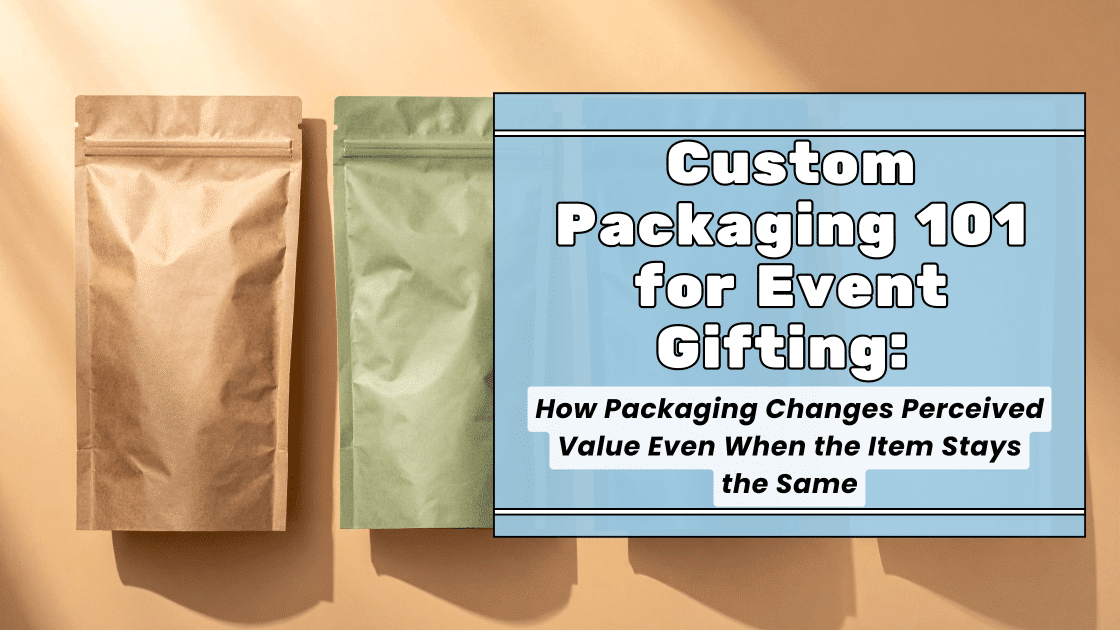
A recent survey found that 72% of consumers say packaging design influences their purchase decisions, which tells you something event planners already feel in real life: people start judging the gift before they ever touch what is inside. That first visual hit, the texture, the fit, the opening sequence, all of it quietly tells your guest whether this feels thoughtful, elevated, and worth keeping. And here is the fun part: you do not always need to upgrade the item itself to upgrade the reaction. Sometimes the smartest move is making the outside work harder.
Packaging Is the Product: Why Perceived Value Starts Outside the Box
In event gifting, packaging is not just protection. It is positioning.
The same tumbler, tee, notebook, towel, or candle can land completely differently depending on how it arrives. Loose in a poly bag, it feels standard. Nested in a rigid box with a soft-touch finish and a clean insert, it suddenly reads as premium, intentional, and photo-worthy.
This is why packaging matters so much for event merch. It creates a story before the gift is even used. It shapes expectations. It signals whether the item was selected with care or just ordered in bulk and handed off at the end.
There is also real psychology behind this. Research on packaging weight and sensory cues shows that packaging can influence perceived quality and even willingness to pay. In plain English, the item can stay the same while the guest experiences it as better.
What that means for planners:
- If your product is simple, elevate the presentation.
- If your item is already premium, protect that perception with packaging that matches it.
- If your goal is social sharing, the unboxing moment is part of the activation.
Pro tip: do not think of packaging as the “extra.” Think of it as the first part of the gift.
Packaging Types Explained: Rigid, Mailer, Sleeve, Pouch, and Wrap
Not every event gift needs a full luxury box. The right packaging format depends on the product, the guest profile, and the moment.
Rigid box
This is your high-perceived-value hero. It has structure, weight, and a keepsake feel. Best for VIP gifting, executive gifts, donor kits, sponsor thank-yous, and anything you want people to open slowly.
Custom mailer box
A great middle ground. It still feels branded and intentional, but it is usually more budget-friendly and easier for shipping. Great for welcome kits, influencer drops, and conference gifting.
Sleeve or belly band
Simple, clean, underrated. A sleeve can transform a basic carton into something more designed without the cost of a fully custom box. This is a smart choice when the product already looks strong on its own.
Pouch or dust bag
Perfect when the gift is soft, textile-based, or tactile. Think apparel, towels, accessories, or lounge-forward gifts. A dust bag can make a casual product feel boutique.
Wrap or tissue presentation
This works when you want softness, movement, and a layered reveal. Good for hospitality gifting, retreat arrivals, and brand experiences that need a little romance.
At JNP, we love matching the format to the feel of the item. For example, plush gifts like pillows for events often benefit from softer presentation systems, while team or spirit-driven items like custom football towels can feel way more elevated with a banded fold, custom wrap, or kit-style presentation instead of a basic stack-and-go handoff.
Finishes That Instantly Upgrade the Look
Once the format is right, the finish is what gives it that “wait, this is nice” effect.
A few finishes do a lot of heavy lifting:
- Soft-touch laminate makes a box feel smoother, richer, and more tactile.
- Foil stamping adds flash in a controlled way and works especially well for logos, monograms, and event marks.
- Spot UV creates contrast by making selected elements glossy against a matte field.
- Embossing or debossing adds depth without needing louder color.
- Edge printing can make even a minimal box feel custom from every angle.
The trick is not using all of them at once.
If you want the packaging to feel expensive, restraint matters. One elevated finish used confidently usually beats three finishes fighting each other. The best premium packaging tends to feel edited, not crowded.
A smart formula:
- matte base
- one metallic or dimensional detail
- strong typography
- breathing room
If you want a good outside reference point, the Foil & Specialty Effects Association’s design resources are useful for understanding what print finishes actually add to presentation, and the research on packaging cues and premiumness is a good reminder that visual details really do shape how premium something feels.
Inserts and Structure: How to Make Items Feel Premium
This is the part brands skip when they are moving too fast.
An insert is not just there to keep things from shifting. It creates order. It frames the gift. It makes the product feel chosen instead of dropped in.
A premium insert does three things:
- holds the item securely
- creates clean spacing around it
- guides the eye to what matters first
For event gifting, this is huge. A well-fitted insert can make one product feel curated. It can also make a two-piece or three-piece kit feel like a real gifting experience instead of a bundle.
Common insert options:
- foam for a more protective, luxe presentation
- paperboard for cleaner structure and better scalability
- molded pulp when you want a fiber-based option with more sustainability appeal
What matters most is fit. If the item slides, rattles, bunches, or arrives tilted, perceived value drops fast.
Pro tip: build around the hero item first. If your gift includes a note card, ribbon, or secondary accessory, that should support the reveal, not compete with it.
Brand System: Matching Packaging to Merch Without Over-Branding
The strongest event packaging usually does not scream logo. It whispers brand with confidence.
This is where a lot of merch programs lose the plot. They brand the box, the insert, the tissue, the card, the sticker, and the product, and by the end the whole thing feels overworked.
Better move: create a brand system.
That can look like:
- logo on one touchpoint only
- brand colors used tonally instead of at full saturation
- typography and materials doing more of the identity work
- a hero mark outside and fuller branding inside
- one message card that explains the moment
This is especially important if the merch itself is already visually active. If you are gifting apparel, pillows, towels, or campus/team pieces, let the product breathe.
A good example of merch and presentation working together is this Wesleyan University championship tote and shirt project. The lesson is simple: the packaging should support the pride, energy, and identity of the gift, not compete with it.
Sustainability Without Looking “Cheap”
Sustainable packaging does not have to look plain, thin, or underdesigned. That idea is outdated.
What makes eco-minded packaging feel cheap is usually not the sustainable choice itself. It is bad execution. Flimsy board. Weak structure. Too many compromises layered together.
You can keep things elevated and still make better material choices:
- ask for FSC-certified paper components
- reduce plastic where it is not needed
- use fiber-based inserts where possible
- avoid unnecessary mixed materials
- design for recyclability from the start
This is the sweet spot: packaging that feels considered, not performative.
Consumers still care about sustainability, but they also care about value, quality, and usability. That is why the best sustainable packaging is not the one that lectures the recipient. It is the one that looks beautiful, functions well, and quietly makes smarter material decisions.
Helpful references here include the FSC page on paper and packaging, the EPA’s paper and paperboard recycling data, and McKinsey’s 2025 look at consumer views on sustainable packaging. The headline for planners is pretty clear: people like responsible choices, but the packaging still has to feel good.
Budget Levers: What to Upgrade First
If the budget is tight, do not try to custom-everything your way into a premium look. Pick the levers that create the biggest perceived lift.
Start here:
1. Structure before decoration
A sturdy format usually matters more than a busy print treatment.
2. Fit before flair
A secure insert or cleaner presentation can do more than another branded graphic.
3. One premium finish before several average ones
Choose foil, deboss, or soft-touch. Not all three by default.
4. Color discipline
Luxury often looks quieter. Fewer colors can actually help the package feel more expensive.
5. Better card stock or wrap
Sometimes upgrading the tactile experience is the win.
If you only have room for one major upgrade, make it the thing the recipient touches first.
Proofing and Production Timeline
Packaging projects go sideways when people treat them like a last-minute add-on. They are not.
Custom packaging needs time for structure, layout, sampling, and production alignment. That means you want to review:
- dielines
- material selections
- finish placement
- insert fit
- color expectations
- shipping and packing method
The cleanest process usually looks like this:
- approve the packaging concept
- review the dieline and artwork setup
- approve a physical or pre-production sample
- confirm pack-out details
- move to final production
The biggest mistakes happen when brands approve flat artwork without thinking through the lived experience of the package. How does it open? What does the guest see first? Where does the note sit? Does the item feel snug? Does the logo land where the eye naturally goes?
Pro tip: if your event date really matters, back your schedule up more than you think you need to. Packaging delays usually come from revisions, not from the idea itself.
Packaging Upgrades Value Faster Than Upgrading the Product
If there is one thing to remember, it is this: people do not experience an event gift in separate parts. They experience the whole moment.
So yes, the item matters. But the reveal matters too. The structure matters. The finish matters. The way it sits in the box matters. The way the branding holds back just enough to feel tasteful matters.
That is why custom packaging is one of the fastest ways to lift perceived value without automatically jumping to a more expensive product. When the outside is done right, the inside feels more special before it is even used.
Short takeaway
If you want event gifting to feel more premium, start by upgrading the packaging system, not just the product. Get the format right, keep the branding intentional, spend where touch and structure matter most, and make sustainability look designed instead of downgraded. That is where perceived value really starts.