Branded tech gifts for corporate events should be selected for compatibility, safety, usefulness, and perceived value before decoration. A product that looks impressive but does not work with common devices, travels poorly, or lacks clear documentation can create more friction than goodwill.
Quick answer: Confirm the device standard, connector type, output, certification or testing documentation, battery and travel restrictions, warranty, packaging, and user instructions. Test samples with representative devices before approving a bulk order. Use restrained branding and choose products that solve a real event, travel, or work need.
Begin With the Event and Recipient Use Case
Tech merchandise should support a realistic moment. Conference attendees may need charging, organization, or audio accessories. Remote employees may benefit from desk tools. VIPs may value a higher-quality travel or productivity product.
Define:
- who receives the gift
- where and when it will be used
- which devices or platforms are common
- whether the item will be carried onto an aircraft
- how it will be distributed or shipped
- what level of support recipients may need
JNP’s promotional product services include technology accessories and custom merchandise for events, teams, and corporate programs.
Choose a Tech Gift Category by Function
Charging
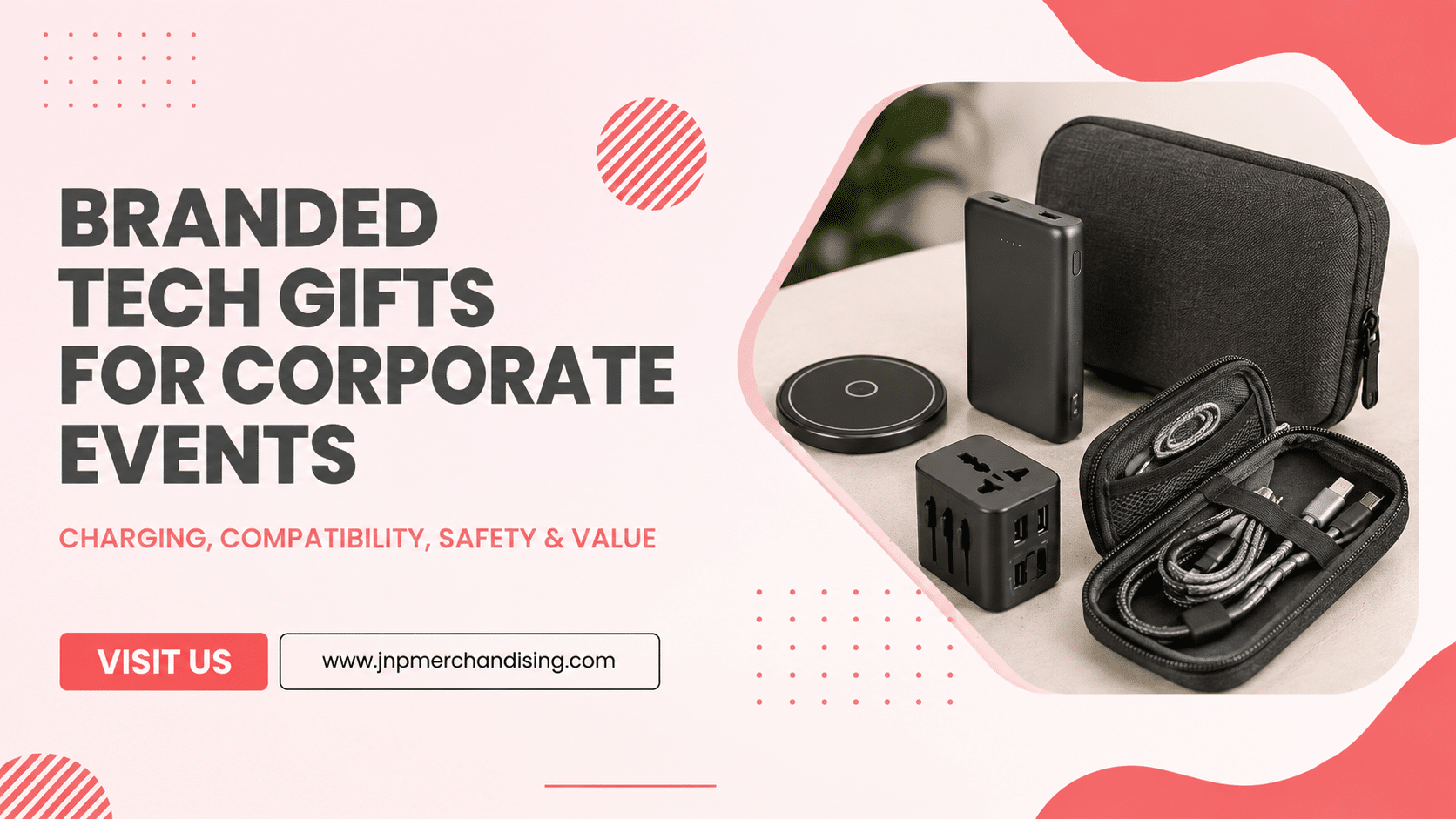
Power banks, wireless chargers, charging cables, and adapters can be useful when their output and connectors match recipient devices. Confirm whether USB-C, USB-A, wireless charging, or another standard is required.
Audio
Earbuds, headphones, and speakers can create perceived value, but they require clear compatibility, charging, pairing, and support information. Consider whether recipients will use them in shared, office, or travel settings.
Travel and organization
Cable organizers, tech pouches, laptop accessories, luggage trackers, and adapters can fit conference and employee programs. Check size, materials, device requirements, and travel considerations.
Desk and productivity
Stands, hubs, webcam accessories, desk mats, and wireless charging surfaces can support work routines. Device dimensions, ports, operating systems, and power requirements matter.
Use JNP’s tech promotional product guide as a starting point for event-specific options.
Check Connector and Device Compatibility
Compatibility should be written, not assumed. Ask which connector, voltage, output, protocol, operating system, or device size the product supports.
Review:
- USB-C, USB-A, Lightning, or other connectors
- wired and wireless charging standards
- maximum input and output
- supported device types
- included cables or adapters
- software or app requirements
- regional plug or power needs
If the audience uses a mix of devices, a universal organizer or a product with well-documented broad compatibility may be safer than a highly specific accessory.
Review Safety Documentation and Recall History
Battery-powered and electrical products require a more careful review than a notebook or tote. Request supplier documentation for the exact model and confirm which testing, certification, labeling, and shipping rules apply.
Ask for:
- exact manufacturer and model
- relevant test reports or certifications
- battery type and capacity
- required warnings and instructions
- warranty and replacement process
- product recall history
- shipping and air-travel documentation when applicable
Search the U.S. Consumer Product Safety Commission recall database for the manufacturer and model before final approval. If the product includes lithium batteries, confirm current carrier and transportation requirements for the actual shipment.
Test Samples With Representative Devices
A digital proof confirms branding, not function. Test an actual sample.
- Charge and use the product as a recipient would.
- Test it with representative devices and cables.
- Check heat, fit, stability, charging behavior, and controls.
- Review instructions and required warnings.
- Inspect decoration placement and durability.
- Test the packaging for event distribution and shipping.
Record the sample model and do not approve a bulk substitute without a new review. Products that look similar may have different internal components or performance.
Match the Investment Level to the Audience
| Program level | Best use | Product direction |
|---|---|---|
| Broad event | General attendees or high-volume distribution | Simple cable organizer, stand, screen accessory, or documented universal item |
| Engaged audience | Qualified prospects, employees, or smaller groups | Quality charger, hub, travel organizer, or audio accessory |
| Premium | VIPs, speakers, clients, or executives | Higher-quality travel, audio, charging, or productivity product with restrained branding |
Higher price does not remove the need for compatibility and safety review. A premium product should also provide clear support and a useful recipient experience.
Use Branding That Protects Long-Term Use
Tech products often remain visible on desks, in travel bags, or during meetings. Large or intrusive branding can reduce how often recipients use them.
Consider:
- small logo placement
- tone-on-tone decoration
- a branded case or package instead of the device surface
- event artwork with a longer useful life
- personalization reserved for premium tiers
Confirm that decoration does not cover vents, controls, labels, charging areas, certification marks, or safety information.
Plan Packaging, Instructions, and Support
Recipients should understand what the product is, what devices it supports, how to use it, and who to contact if it fails.
Include concise instructions for:
- initial charging or setup
- supported connectors or devices
- basic operating steps
- safety and disposal information
- warranty or replacement contact
For event handout, keep the package portable. For individual shipment, protect the product without creating unnecessary volume. JNP’s custom packaging guide can help connect protection and presentation.
Prepare for Air Travel and Shipping
Battery-powered items may be subject to carrier, venue, and transportation rules. Requirements can change and may differ by battery type, capacity, package configuration, destination, and whether a product is carried or shipped.
Before approval:
- identify the battery and capacity
- confirm the shipping mode and destination
- review current carrier requirements
- confirm event and venue restrictions
- provide recipient travel guidance when appropriate
Do not make a blanket claim that every battery product can be shipped or carried in the same way.
Measure Usefulness and Program Quality
Track more than distribution volume.
- units distributed by audience tier
- sample and quality-control results
- support or replacement requests
- shipping or venue exceptions
- recipient feedback on compatibility and usefulness
- post-event engagement or quote activity connected to the program
If a product creates repeated setup questions or compatibility complaints, remove it from the approved assortment even if it was popular at distribution.
Branded Tech Gift Approval Checklist
- Recipient and use case defined
- Exact manufacturer and model confirmed
- Connector and device compatibility documented
- Output and included accessories verified
- Testing and safety documents reviewed
- Recall history checked
- Shipping and travel requirements confirmed
- Working sample tested
- Decoration placement approved
- Instructions and support process prepared
- Packaging tested for distribution
Frequently Asked Questions
What are good branded tech gifts for corporate events?
Useful categories include charging accessories, organizers, stands, hubs, audio products, and travel tools. The best choice depends on audience devices, event context, safety documentation, and distribution method.
Are branded power banks safe to give away?
They can be appropriate when the exact model has suitable documentation, sample testing, instructions, and a clear warranty or replacement process. Review recall history and current shipping or travel requirements before ordering.
How can a buyer confirm compatibility?
Document the supported connectors, charging standards, output, operating systems, device sizes, and included accessories. Test the sample with representative devices from the intended audience.
Should a logo be printed directly on the device?
It can be, but the branding should not block controls, vents, labels, charging areas, or safety information. Subtle device branding or a branded case may support longer-term use.
What should come with a branded tech gift?
Include necessary cables or adapters, clear setup and compatibility information, safety guidance, and a support or replacement contact. The package should protect the product and remain easy to carry.
Choose Tech Gifts That Work After the Event
The best branded tech gift earns repeat use because it is compatible, dependable, safe, and easy to understand. Product function should be approved before artwork.
For a booth, sponsor package, or attendee welcome kit, connect product approval to JNP’s conference and trade show merchandise programs so audience tiers, quantities, and distribution are planned alongside the tech specifications.
Ask JNP to source and evaluate tech gift options for your audience, event, budget, device requirements, quantity, and delivery plan. You can also explore JNP’s real project portfolio.