A branded merchandise budget should be built around the audience, objective, quantity, and full delivery experience. A lower-cost item can be the right choice for broad event distribution, while a more substantial product may be appropriate for clients, speakers, executives, or employees. The goal is not to spend the most. It is to place the available budget where recipients will notice and use it.
Quick answer: Divide the program into good, better, and premium tiers based on recipient importance and the action you want the merchandise to support. Include decoration, packaging, kitting, shipping, and contingency costs in the budget, not only the unit price. Then compare options by usefulness, brand fit, perceived quality, and operational complexity.
Start With the Program Goal, Not the Product Catalog
Before comparing items, define the job the merchandise needs to do. A conference giveaway may support booth traffic or lead follow-up. A team program may reinforce belonging. A client gift may recognize a relationship. A speaker gift may communicate appreciation and connect to the event experience.
Write a one-sentence objective:
- Give every attendee one useful item that reinforces the event theme.
- Thank qualified prospects after an in-person conversation.
- Welcome remote employees with a consistent first-day experience.
- Recognize high-value clients with a premium, understated gift.
This decision protects the budget from random additions. JNP’s promotional product services begin with consultation, design, execution, and delivery so product choices can follow the business goal.
Calculate the Complete Cost Per Recipient
Unit price is only one line in a merchandise program. The useful planning number is the complete cost per recipient or per distribution unit.
Include:
- product cost
- decoration setup and production
- individual names or variable data
- samples and proofing
- packaging and printed inserts
- assembly and quality control
- bulk freight or individual shipping
- storage, event delivery, or handling when applicable
- replacement and contingency inventory
A product with a slightly higher unit cost may produce a simpler, less expensive program if it needs minimal packaging, ships efficiently, and has broad recipient appeal. The opposite can also be true. A low-cost item with complicated personalization or fragile packaging may create more operational expense than expected.
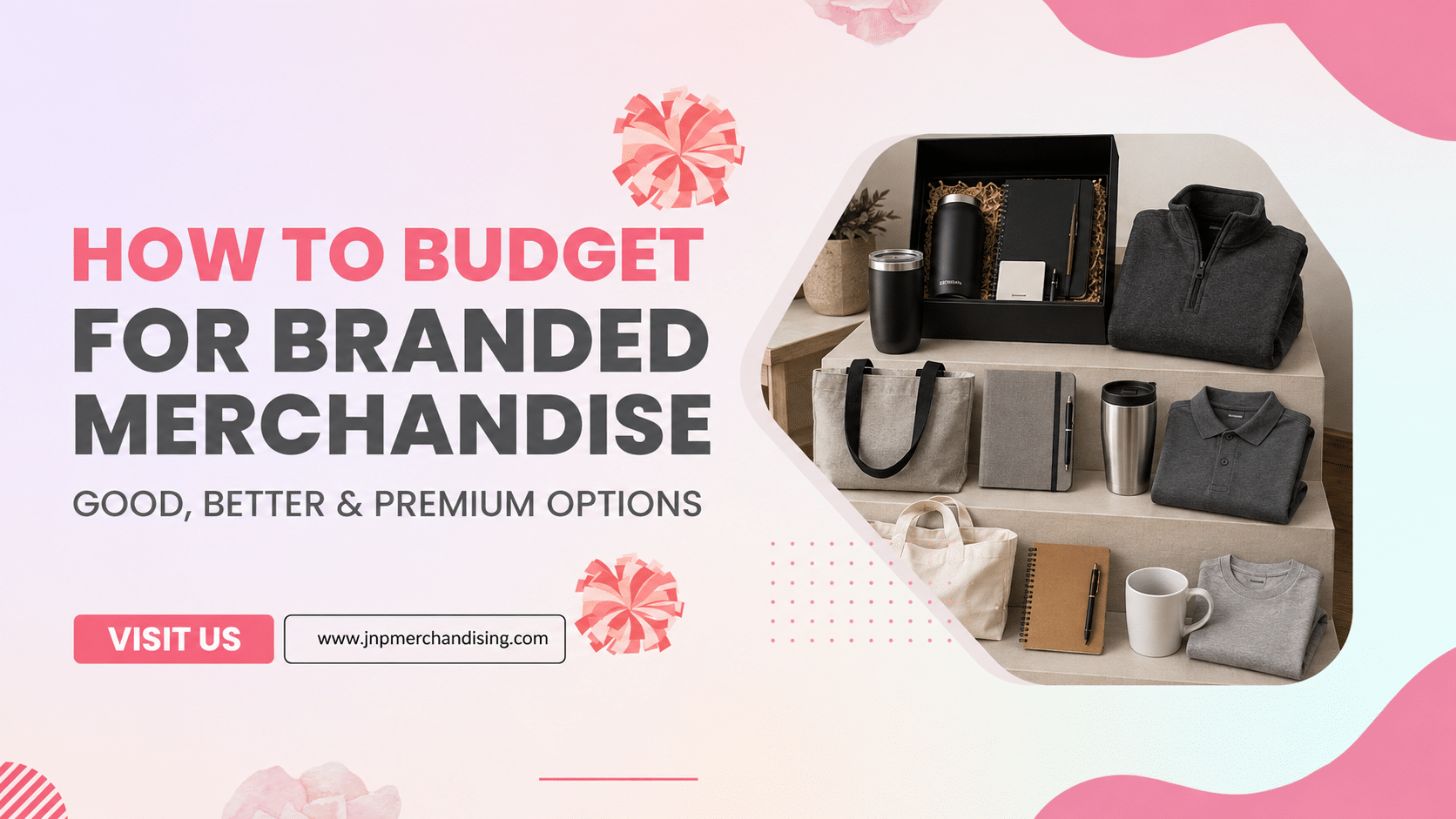
Use Good, Better, and Premium as Strategic Tiers
Good, better, and premium are not judgments about the recipient. They are planning tiers that match different moments and levels of distribution.
Good: useful products for broad distribution
The good tier is designed for scale. Choose practical, portable products that support the event or daily routine and can carry the brand cleanly.
Possible directions include:
- tote bags or drawstring bags
- notebooks and writing tools
- simple drinkware
- lanyards, badges, or compact accessories
- event-specific items such as towels or cooling accessories
Spend priority should go to product quality and legible decoration. Skip unnecessary filler. One useful item is more likely to support the brand than several products recipients leave behind.
Better: stronger utility and longer-term use
The better tier works for qualified leads, employees, clients, and smaller attendee groups. It can support more durable materials, upgraded decoration, a coordinated pair of products, or improved packaging.
Possible directions include:
- insulated drinkware
- higher-quality apparel or headwear
- travel organizers or useful bags
- desk and technology accessories
- a two- or three-item kit with a focused theme
This tier should feel intentional. If multiple products are included, each should support the same recipient need or story.
Premium: recognition, relationship, and experience
The premium tier is most effective when reserved for a clear reason: a key client, executive, speaker, VIP, milestone, or major contributor. Subtle branding, higher-quality materials, thoughtful personalization, and presentation often matter more than the number of items.
Possible directions include:
- premium branded gift boxes
- quality travel, home, or lifestyle products
- executive accessories
- personalized products selected for the recipient group
- limited-edition merchandise tied to a meaningful moment
Review JNP’s custom gifting services and premium corporate gifting guide for additional planning ideas.
Segment Event Merchandise by Audience and Behavior
Many programs work better with multiple tiers than with one item for everyone. At a conference, a broad giveaway can support traffic, a mid-tier item can recognize engaged prospects, and a premium gift can support scheduled meetings, speakers, or sponsors.
| Audience | Merchandise role | Budget priority |
|---|---|---|
| General attendees | Useful reminder of the event or brand | Scale, portability, clear branding |
| Engaged prospects | Reward a meaningful interaction | Higher utility and perceived value |
| VIPs or speakers | Recognition and relationship building | Quality, personalization, presentation |
| Staff or volunteers | Identification, function, and appreciation | Comfort, fit, consistency, reusability |
Connect distribution rules to actions that teams can execute consistently. If a premium item is intended for qualified conversations, define what qualifies before the event starts.
Choose Products Using a Value Scorecard
Catalog price does not tell you which item will perform best. Score each product against the program’s actual requirements.
- Usefulness: Is the product relevant to the recipient’s work, travel, home, or event experience?
- Brand fit: Does the style and quality reflect how the organization wants to be perceived?
- Visibility: Can the brand be present without making the item feel overly promotional?
- Portability: Can event attendees carry it and can remote recipients receive it efficiently?
- Durability: Is it likely to survive repeat use?
- Production fit: Can the decoration, quantity, and deadline be supported?
- Packaging fit: Does it work alone or with the planned kit?
Use the scorecard to remove exciting but impractical ideas early. For conference-specific planning, see JNP’s trade show booth merchandise guide.
Where to Spend More and Where to Simplify
Spend more where recipients experience the product most directly. Simplify elements that do not add meaningful value.
Consider investing more in:
- the primary product’s material, fit, or function
- decoration that is durable and appropriate to the surface
- accurate personalization
- protective packaging for fragile or premium products
- quality control and reliable delivery
Consider simplifying:
- the number of product variations
- the number of decoration locations
- oversized packaging
- multiple inserts that repeat the same message
- disposable filler products
Simple does not have to look basic. A well-chosen product, clean logo treatment, concise insert, and organized presentation can feel more premium than an overfilled kit.
Account for Quantity, Minimums, and Product Variations
Quantity affects availability, unit economics, production methods, and packaging. Apparel sizes, color variations, individual names, and multiple shipping destinations also add complexity.
Before comparing quotes, make sure every option is based on the same:
- estimated quantity
- decoration method and number of locations
- color and size mix
- packaging requirement
- delivery model
- in-hands date
Ask how substitutions or inventory changes will be handled. A quote should help the buyer understand the complete program, not only a product line.
Build a Contingency Line Into the Budget
Roster changes, damaged goods, misprints, address corrections, and replacement shipments happen. A contingency plan can include unpersonalized extras, backup packaging, or a reserved budget line.
For multi-item programs, approve one finished sample and use a bill of materials during pack-out. JNP’s kitting guide explains how inventory, inserts, quality control, and shipping fit together.
Measure the Program Against Its Objective
Measurement should match the business purpose. Depending on the campaign, teams may track:
- distribution by audience tier
- qualified booth conversations
- post-event follow-up responses
- delivery and exception rates
- employee or client feedback
- repeat use observed in photos or future events
- quote requests or program renewals
Do not force every merchandise program into a direct-response metric. Recognition, belonging, and relationship goals may require qualitative feedback alongside operational data.
Frequently Asked Questions
What is a reasonable budget for branded merchandise?
There is no universal per-person amount. The right budget depends on audience, quantity, product quality, decoration, packaging, fulfillment, and shipping. Start with the business goal and a complete delivered budget, then ask for options at several levels.
Is one premium item better than several inexpensive items?
Often it can be, especially when usefulness and long-term use matter. For a broad event distribution, a focused lower-cost product may be more appropriate. Compare options against recipient needs rather than item count.
How should merchandise budgets be divided across event attendees?
Segment by the interaction you want to support. A high-volume item may serve general attendees, a better item can recognize engaged prospects, and a premium gift can be reserved for VIPs, speakers, clients, or scheduled meetings.
What costs are commonly missed?
Decoration setup, samples, packaging, inserts, assembly, shipping, address corrections, storage, replacements, and contingency inventory are frequently overlooked when teams focus only on unit price.
How can a company make lower-cost merchandise feel more premium?
Choose one useful product, use restrained branding, keep the design consistent, present it cleanly, and connect it to the event or relationship. Removing filler often improves the experience.
Turn the Budget Into a Merchandise Plan
A strong budget helps the creative team make better choices. It defines where quality matters most, which audiences need different treatment, and how the merchandise will reach recipients without surprises.
Request a branded merchandise consultation with your audience, quantity, budget range, delivery date, and campaign objective. JNP can help compare good, better, and premium directions, coordinate artwork, and plan production and delivery.