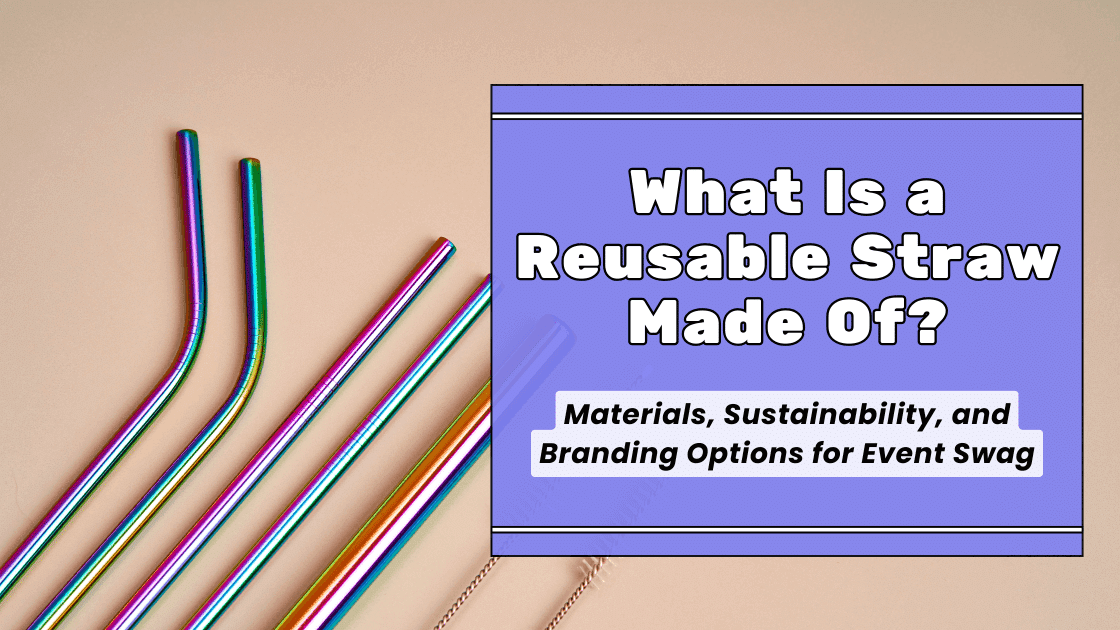
In one of the biggest global beach-cleanup efforts on the planet, volunteers have pulled nearly 15 million straws and stirrers out of beaches and waterways since 1986.
That number is wild, and it tells you something important: the smallest “throwaway” details at events add up fast.
The good news is that switching to reusable straws is not just an eco move, it is a branding move that guests actually notice and keep.
Let’s break down what reusable straws are made of, what makes them genuinely sustainable, and how to turn a simple straw into event swag that feels premium, modern, and totally on-brand.
Understanding Reusable Straws: Why They Matter for Events
Reusable straws matter for events because they solve three problems at once: waste, guest experience, and brand visibility.
First, straws are a classic example of “small plastic, big footprint.” Many recycling programs do not accept traditional plastic straws because they are lightweight and difficult to sort, so they often end up in the trash even when people try to recycle them.
Second, from a vibe perspective, a flimsy straw in a gorgeous cocktail is a mismatch.
Third, a reusable straw is one of those items people take home, toss into a tote, and use again.
That is ongoing brand exposure for weeks and months, not just one night.
If your event has iced coffee, cocktails, smoothies, or canned drinks, a straw is not an accessory. It is part of the experience. When it feels intentional, guests read the whole event as more elevated.
Also, inclusivity matters here. Some guests need straws for accessibility reasons. Reusable straws let you offer options that feel thoughtful rather than afterthought.
Offer a small “straw bar” with a few material choices and clear labels (standard, wide smoothie, soft-tip) so everyone can pick what works for them.
Main Materials Used in Reusable Straws: Pros and Cons
Reusable straws typically come in a few main materials. Each one has a different feel, a different sustainability profile, and a different “brand personality.”
Stainless steel straws
What they feel like: sleek, modern, premium.
Pros: durable, travel-friendly, clean look, strong perceived value. Steel is also highly recyclable and fits a more circular materials story.
Cons: metal-on-teeth sensation (some people hate it), not great for guests who prefer softer materials.
Best for: corporate events, brand activations, conferences, and luxury gifting suites.
Pro tip: If you want stainless but want it to feel softer, add a silicone tip or choose a slightly wider diameter with a rounded edge.
Silicone straws
What they feel like: soft, flexible, accessible.
Pros: comfortable, great for kids or anyone sensitive to hard materials, and often easiest for accessibility.
Cons: can hold onto odors if not cleaned well, and silicone recycling is not widely available curbside in most places.
Best for: family-friendly events, wellness brands, festivals, hospitality, and anything where comfort matters.
Pro tip: Always pair silicone straws with a cleaning brush and a quick care card. That one detail keeps them from getting “mysterious kitchen drawer” energy.
Glass straws
What they feel like: chic, clean, “I drink matcha daily.”
Pros: looks beautiful in photos, does not hold flavors, often dishwasher-friendly, and recyclable where glass recycling exists.
Cons: breakage risk, not the move for high-crowd or high-chaos environments unless packaged thoughtfully.
Best for: influencer events, bridal events, upscale tastings, boutique brand launches.
Pro tip: If you choose glass, package it like a gift, not a utensil. A protective tube or case turns breakability into a premium unboxing moment.
Bamboo straws
What they feel like: earthy, natural, eco-forward.
Pros: bamboo is fast-growing and renewable, and the aesthetic is perfect for outdoorsy or nature-forward brands.
Cons: can absorb flavors over time, typically has a shorter lifespan than steel, and performance varies by quality.
Best for: outdoor events, eco markets, farm-to-table concepts, and sustainability campaigns.
Pro tip: Bamboo works best when it is positioned as “natural and compostable at the end of life,” with clear guest instructions. Avoid overpromising on longevity.
High-quality plastics (like Tritan) and other composites
You will sometimes see reusable plastic options. They can be durable and affordable, but if your goal is to signal sustainability, many audiences perceive “plastic” as the opposite of the message, even when it is technically reusable.
Pro tip: If you go plastic, lean heavily into durability and reuse, and consider pairing with a case and care guide so it does not get treated like disposable.
Sustainability Factors: What Makes a Straw Truly Eco-Friendly?
Here is the real truth: a straw is only sustainable if it actually gets reused. The most eco-friendly choice is the one your guests will use again, not the one that looks best on paper.
Use these factors to evaluate “truly eco-friendly” options:
1) Durability and reuse potential
UNEP’s guidance on single-use plastics is clear on the big principle: the more a product is reused, the lower its overall impact over time. So ask yourself: will this straw survive being tossed in a bag, run through a dishwasher, and used on a random Tuesday?
If yes, you are on the right track.
Pro tip: For event swag, prioritize materials that feel worth keeping. Stainless and well-made silicone usually wins here because it is hard to destroy.
2) End-of-life options (recyclable, compostable, or neither)
Not all “eco” materials are equally easy to handle after years of use.
- Steel: widely recyclable and a strong circularity story.
- Glass: recyclable, butit depends on local programs and contamination.
- Bamboo: can be biodegradable, but only if it is not coated in materials that prevent breakdown.
- Silicone: long-lasting, but recycling options are limited in many places.
Pro tip: If your straw’s end-of-life story is complicated, offset it with a stronger reuse story: include a case, a brush, and a care guide. If guests reuse it 200 times, you are already winning.
3) Packaging and accessories
A reusable straw in excessive plastic packaging is the quickest way to lose credibility.
Pro tip: Choose minimal packaging, or packaging that becomes part of the gift, like a reusable pouch. We can make that pouch branded and gorgeous, so the packaging becomes a feature, not a guilt moment.
4) Logistics and guest behavior
Your sustainability plan should match the event’s reality.
- High-energy festival with limited wash stations: go durable, low-maintenance, and easy to carry.
- Seated dinner with curated place settings: glass can work beautifully.
- Corporate conference with swag bags: stainless steel with a branded case is a safe win.
Pro tip: If you are serious about reducing waste on-site, add a small collection point and signage for any guests who do not want to take theirs home. Then you can sanitize and reuse or recycle responsibly.
For a deeper dive on how the world is thinking about plastic pollution right now, UNEP’s plastic pollution hub is a solid starting point, and the U.S. EPA’s waste management hierarchy is the simplest framework to explain why “reduce and reuse” comes before “recycle.”
Branding Opportunities: Customizing Reusable Straws for Event Swag
This is where reusable straws go from “nice” to “obsessed.”
At JNP Merchandising, we think about branded merch like a mini brand experience: it should look good, feel good, and make people want to keep it. Reusable straws are perfect because they are functional, aesthetic, and they have natural “brand real estate” beyond the straw itself.
1) Customize the straw itself
- Laser engraving (stainless steel): crisp, permanent, premium.
- Color-matching (silicone): align to your palette, seasonal drops, or campaign colors.
- Subtle marks (glass): small branding near the top can look very high-end.
Pro tip: If your brand is luxury, keep the branding minimal and tactile. A small engraved logo feels more expensive than oversized printing.
2) Brand the case, pouch, or travel tube
In real life, people reuse straws when they are easy to carry. The case is the difference between “cute idea” and “daily habit.”
- Branded silicone sleeve
- Canvas pouch with a snap
- Slim travel tube that fits in a purse
- Keychain-style case for festivals
Pro tip: Put your primary branding on the case, not just the straw. The case gets seen on desks, in bags, and on countertops.
3) Add a “swag upgrade” bundle
If you want your event merch to feel curated, bundle the straw set with something guests already love.
- Straw + custom tumbler
- Straw + cocktail kit insert card
- Straw + wellness bundle (tea, electrolyte packets)
- Straw + VIP gifting
And if your event has a gifting lounge or executive audience, pair your reusable straw set with custom corporate wine gift sets for a polished, elevated moment that feels intentional, not random.
Pro tip: When bundling, keep it cohesive. A stainless steel straw set pairs beautifully with drinkware, wine gifting, and travel accessories. Bamboo pairs better with outdoor and sustainability-forward themes.
4) Use the straw as a conversation starter
We love adding a small insert card that explains:
- what the straw is made of
- why it matters
- how to clean it
- how to reuse it at home
Pro tip: Add a QR code that links to a “reusable essentials” page, an event recap, or a brand story. That is a smooth way to turn swag into ongoing engagement.
Caring for Your Branded Reusable Straw: Cleaning and Maintenance Tips
If you want your guests to actually reuse their straws, make it effortless. Here are simple, reliable tips that work across materials:
Daily cleaning (best practice)
- Rinse right after use if possible.
- Wash with warm water and mild dish soap.
- Use a straw brush to clean the inside.
- Air dry fully before storing.
Pro tip: Include a brush in every set. It is inexpensive, and it removes the one barrier that stops people from reusing straws.
Dishwasher notes by material
- Stainless steel: typically dishwasher-friendly.
- Silicone: often dishwasher-friendly, but odors can build up, so deep clean occasionally.
- Glass: often dishwasher-safe, but protect it from rattling by placing it securely or in a utensil basket if recommended by the manufacturer.
- Bamboo: usually hand-wash only and dry thoroughly to avoid swelling or cracking.
Pro tip: A tiny care card in the packaging reduces returns, reduces guest confusion, and increases reuse. It is a brand experience upgrade.
Deep-clean refresh (especially for silicone and bamboo)
- Soak in warm, soapy water.
- Use the brush thoroughly.
- For lingering odors in silicone, a baking soda soak can help.
- Always dry completely before storing.
Pro tip: If you are distributing straws at scale, consider adding a line in your event follow-up email like: “Quick care tip: rinse, brush, dry.” It reinforces reuse and keeps your brand associated with thoughtful details.
Make an Impact with Sustainable & Branded Reusable Straws at Your Next Event
Reusable straws are one of those rare merch choices that are small, affordable, and genuinely high impact. They reduce reliance on single-use plastics, elevate the guest experience, and give your brand a functional item that people actually keep. The key is choosing the right material for your audience, making reuse easy with a case and brush, and branding it in a way that feels modern and intentional.
If you want event swag that feels current, sustainable, and photo-ready, reusable straws deserve a spot on your shortlist. And when you are ready to make it look premium, cohesive, and totally on-brand, JNP Merchandising is here to curate the exact set that fits your event.
Short takeaway:
- Pick the material based on guest experience first (comfort, durability, vibe).
- Make reuse effortless (case + brush + care card).
- Brand the set like a gift, not a giveaway, and it will keep working long after the event ends.
Recommended reading for your sustainability and compliance notes: Ocean Conservancy’s International Coastal Cleanup data, the U.S. EPA’s waste management hierarchy, UNEP’s plastic pollution resources, FAO’s bamboo sustainability background, and the U.S. eCFR food-contact standards for repeated-use rubber materials.