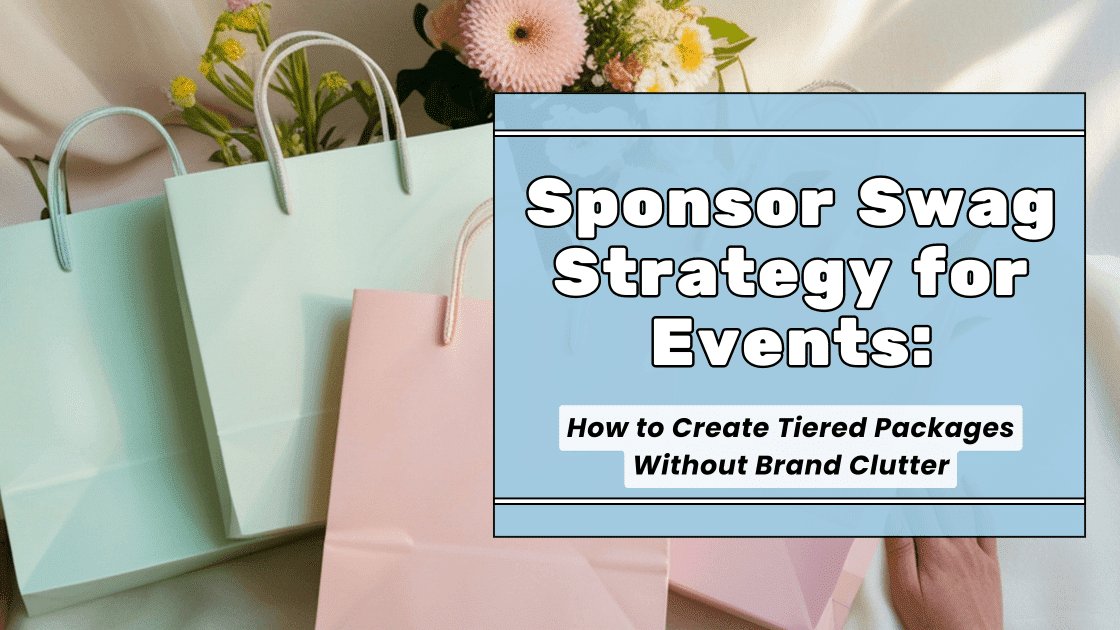
Here’s the tea: sponsor swag can either make an event feel polished, intentional, and high-value, or it can make the whole room look like a walking logo wall. According to ASI’s 2026 promotional products research, 78% of U.S. consumers would keep a promotional item because it is useful. That means the strategy is not simply “put the sponsor logo somewhere.” The real strategy is choosing merchandise that attendees actually want, while giving sponsors visibility that feels elevated, not chaotic.
Why Sponsor Swag Needs a Strategy Before Products Are Picked
A sponsor swag strategy is the plan for how sponsor-funded merchandise will support event goals, attendee experience, and sponsor visibility without overwhelming the design. It decides which sponsors appear where, which items make sense, how logos are handled, and how the merchandise gets delivered.
Before anyone picks a tote, bottle, towel, hoodie, or desk accessory, the strategy should control:
- Sponsor visibility
- Product quality
- Logo hierarchy
- Attendee experience
- Packaging and fulfillment
The issue with skipping strategy is that every sponsor naturally wants more visibility. Totally fair. They paid to be part of the moment. But when every logo gets treated equally on every item, the end result feels cluttered fast. Attendees can sense when swag was built around sponsor appeasement instead of actual usefulness.
The Problem With “Logo Pile-On” Merchandise
Logo pile-on happens when too many sponsor marks compete for attention on one item. A sleek travel pouch suddenly becomes a billboard. A premium shirt starts looking like a tournament jersey. A high-quality tote turns into a sponsor directory.
That does not make sponsors look better. It usually makes the item less desirable.
The Better Goal: Visibility Without Visual Noise
The better move is curated visibility. Think co-branded merchandise that feels intentional, where the event brand leads the design and sponsor recognition supports it. The sponsor should feel seen, but the attendee should still feel like they received something stylish enough to keep.
Build Sponsorship Tiers Around Value, Not Just Logo Size
Sponsor tiers should not be based only on who gets the biggest logo. That is the fastest way to make your merchandise feel outdated. Strong tiered sponsorship packages translate investment into better moments, better products, and better recognition.
Here is a clean way to think about it:
| Sponsorship Level | Swag Access | Logo Visibility | Best-Fit Items |
| Gold / Presenting Sponsor | Hero item or VIP gift | Premium placement, one major product moment | Jacket, premium tote, travel kit, custom towel, elevated drinkware |
| Silver / Supporting Sponsor | Shared event item or activation moment | Secondary placement or co-branded insert | Notebook, wellness kit, lounge giveaway, charging station item |
| Bronze / Community Sponsor | Recognition touchpoint | Insert, QR card, signage, recap email | Sticker card, printed insert, digital mention, booth pickup item |
This keeps each tier meaningful without giving every sponsor permission to touch every design.
Top-Tier Sponsors Get Hero Placement, Not Unlimited Placement
Premium sponsors deserve premium visibility. But premium does not mean “logo everywhere.” It means their placement gets the best canvas.
For example, a presenting sponsor might own a high-quality arrival gift, like a polished tote, a soft stadium towel, or a VIP pillow gift. A sponsor tied to school spirit or sports energy could be featured through custom football towels for branded events that feel fun, functional, and photogenic.
That is much stronger than shrinking ten logos onto one corner.
Mid-Tier Sponsors Should Own Specific Moments
Mid-tier sponsors shine when they are attached to a specific event experience. A wellness sponsor can own a reset station. A tech sponsor can own charging accessories. A hospitality sponsor can own coffee kits or lounge pillows.
This gives the sponsor context, which makes the branding feel natural instead of forced.
Entry-Level Sponsors Can Be Included Through Inserts and Digital Touchpoints
Entry-level sponsors still matter, but they do not need to be printed on the main product. Use QR cards, printed inserts, digital signage, recap emails, or sponsor thank-you pages. This keeps lower-tier recognition visible while protecting the merchandise design.
It is a cleaner experience for the attendee and a smarter long-term sponsorship product for the event.
Choose Swag Items Based on Sponsor Fit and Attendee Use
The best promotional products for events are not random. They match the event moment, the sponsor category, and the attendee’s lifestyle.
A simple way to plan:
- Arrival: tote bags, lanyards, reusable bottles, welcome kits
- Session use: notebooks, pens, tech organizers, charging cables
- Networking: badge accessories, card holders, mints, coffee items
- Travel home: pouches, packing cubes, snack kits, compact blankets
- VIP gifting: apparel, premium drinkware, pillows, elevated bags
- Post-event follow-up: mailers, desk items, thank-you gifts
This is where the strategy starts feeling stylish. A sponsor does not just get an item. They get a moment.
Match the Item to the Sponsor’s Role
A wellness sponsor should not receive the same swag strategy as a software sponsor. A hospitality brand should not be treated the same as a financial partner.
Try this:
- Wellness sponsor: recovery kit, water bottle, cooling towel, sleep mask
- Tech sponsor: cable organizer, power bank, webcam cover, desk pad
- Food sponsor: snack box, coffee sleeve, reusable lunch tote
- Hospitality sponsor: travel pouch, pillow, blanket, lounge accessory
For events with lounges, panels, alumni gatherings, or VIP seating, custom pillows for events can create a sponsor moment that feels decor-forward instead of giveaway-heavy.
Prioritize Items Attendees Will Actually Carry, Use, or Keep
Useful swag wins. PPAI’s consumer research on promotional products notes that people keep promo products when they are useful, attractive, and high-quality. That should be the filter for every sponsor item.
Before approving a product, ask:
Would someone carry this around the event?
Would someone pack this in their suitcase?
Would someone use this after the event?
Would someone post this because it looks good?
If the answer is no, the item probably needs to be rethought.
Create a Logo Hierarchy Before Artwork Begins
Logo hierarchy is the difference between sponsor swag that looks designed and sponsor swag that looks negotiated. Before artwork begins, decide how logos will appear across the merchandise system.
A clean hierarchy looks like this:
- Event brand first
- Presenting sponsor second
- Supporting sponsors third
- Lower-tier sponsors through QR codes, inserts, signage, or digital recognition
This gives every sponsor a place without making every product carry the full sponsorship roster.
Use One Primary Logo Moment Per Product
One primary logo moment per product keeps the item wearable, usable, and visually calm. That might mean the event logo on the front and the presenting sponsor on the sleeve, tag, label, insert, or packaging.
For premium items, less is usually more. A subtle logo can feel more expensive than a giant one.
Move Secondary Recognition to Packaging, Inserts, or QR Codes
Packaging is the secret weapon. Belly bands, sleeves, tissue paper, sticker seals, thank-you cards, QR cards, and box inserts can all carry sponsor recognition without crowding the actual product.
This is especially helpful when sponsors want acknowledgment but the event team wants the item to stay clean.
Protect the Event Brand With Pre-Approved Artwork Rules
Sponsors should receive artwork rules before they submit logos. Make the rules friendly but clear.
Include:
- Acceptable logo file types
- Maximum logo size
- Approved placement zones
- Color restrictions
- One-color logo options
- Deadline for artwork approval
- Rules for sponsor name length or taglines
This protects the event brand and prevents last-minute design chaos.
Package the Swag So Each Tier Feels Intentional
Tiered swag feels elevated when each package has a clear structure. The easiest framework is:
Anchor item + support item + recognition moment + delivery plan.
For example, a top-tier sponsor might receive a premium tote as the anchor item, a travel pouch as the support item, a printed card as the recognition moment, and VIP room-drop delivery as the plan. A mid-tier sponsor might own a coffee break giveaway with branded sleeves, table signage, and a QR code. A bronze sponsor might appear on a printed sponsor card inside the event welcome kit.
Use an Anchor Item for Each Tier
Every sponsor tier needs one centerpiece. Without an anchor item, packages start to feel like a pile of small things.
A strong anchor could be a tote, towel, hoodie, pillow, bottle, tech organizer, or premium notebook. For inspiration, JNP’s Wesleyan University championship merchandise project shows how commemorative merchandise can feel celebratory, useful, and connected to a real moment.
Make Packaging Do Some of the Sponsorship Work
Packaging can make sponsor recognition feel chic. A simple insert card can explain the sponsor’s role. A belly band can create a premium unboxing moment. A sticker can tie the full kit together.
It is not just decoration. It is sponsor storytelling.
Measure Sponsor Value After the Event
Sponsor swag should be measured after the event, not guessed about. Event Marketer’s EventTrack research continues to show how important live experiences are for brand engagement, and swag should be treated as part of that experience.
Track:
- Item pickup rate
- QR scans
- Social shares
- Attendee survey feedback
- Sponsor satisfaction
- Reorder interest
- Photos of swag in use
- Booth or activation traffic tied to the item
Then turn that into a sponsor recap. Include distribution counts, event photos, attendee comments, and engagement snapshots.
Track More Than Impressions
Impressions matter, but they do not tell the whole story. A sponsor should know whether attendees actually picked up the item, used it, posted it, scanned the QR code, or asked about the brand.
That is the difference between “your logo was there” and “your brand created a moment.”
Use Results to Sell Cleaner Packages Next Year
Once you know what worked, next year’s sponsorship packages become easier to sell. You can show sponsors which items were kept, which activations got attention, and which recognition formats felt most polished.
Cleaner packages become easier to justify because you are not selling logo space. You are selling experience, taste, and proof.
Build Sponsor Swag Packages That Feel Curated, Not Crowded
The best sponsor swag strategy is simple: define the tier, choose the right item, and control the logo hierarchy.
That is how you keep sponsors happy without cluttering the event brand. It is also how you create merchandise that attendees want to carry, use, and remember.
At JNP Merchandising, we help brands build tiered sponsor swag packages for conferences, galas, corporate activations, alumni events, sports celebrations, and branded experiences. From product sourcing and artwork rules to packaging, fulfillment, and sponsor-ready presentation, we make the whole thing feel polished from first impression to final handoff.
Sponsor swag works best when it feels intentional. Give each sponsor a clear role, give each item a reason to exist, and let the design breathe. The result is better visibility, better merchandise, and an event experience that feels curated instead of crowded.