PPAI research has found that 68% of Gen Z say branded merch improves their perception of a brand, and 63% say a promotional product has influenced a purchase.
That is not small. It means the item itself matters, but the way guests receive it matters too. When personalization happens live, in front of them, your merch stops feeling like giveaway filler and starts feeling like part of the event experience.
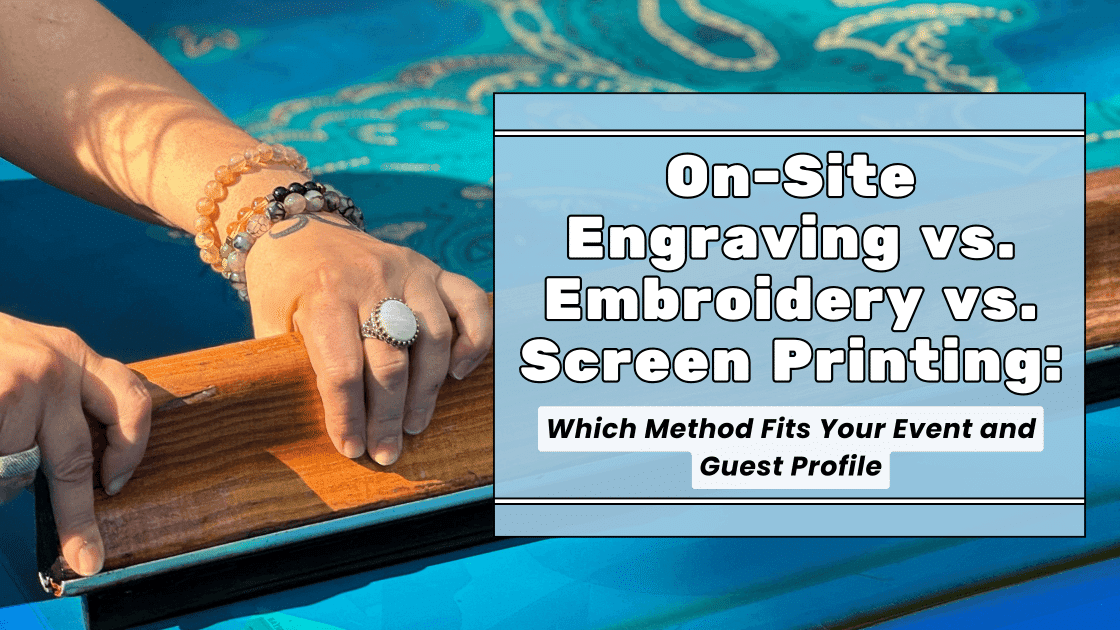
That is where the real decision comes in: engraving, embroidery, or screen printing? Each one creates a different vibe, moves at a different pace, and works best for a different kind of crowd. If you choose the method that matches your audience, product, and event energy, you do not just hand out merch. You create a moment people want to keep.
Quick Comparison: Engraving vs Embroidery vs Screen Printing
Here is the fast read:
- Choose engraving when you want elevated, giftable, polished pieces.
- Choose embroidery when you want wearable merch that feels premium and long-lasting.
- Choose screen printing when you want energy, volume, and a visible crowd magnet.
Think of it this way:
- Engraving feels intimate and high-end.
- Embroidery feels stylish, tactile, and polished.
- Screen printing feels fast, buzzy, and built for activation.
If your event has VIP gifting, sponsor thank-yous, or executive attendees, engraving usually leads. If you are building wearable merch people will actually use after the event, embroidery tends to win. If the goal is lines, hype, and lots of branded takeaways moving fast, screen printing is your friend.
Best For Premium Gifts: Engraving (Metal, Leather, Acrylic)
Engraving is the method that makes people pause, look closer, and say, “Wait, this was made here?”
It is especially strong for:
- metal drinkware
- leatherette notebooks and patches
- acrylic keepsakes
- keychains, tags, desk accessories, and gift box add-ons
The beauty of engraving is that it feels custom without screaming for attention. Clean initials. A subtle name. A short title. A refined monogram. That kind of finish reads premium immediately, especially for brand experiences where the guest list leans executive, donor, speaker, or VIP.
This method works best when your product itself already has value. Engraving will not magically make a cheap blank feel luxurious. It amplifies quality. That is why it pairs so well with premium gifting programs, executive lounges, and client appreciation events.
Pro tips:
- Keep the personalization short. Initials, names, or 1-line titles move faster and look cleaner.
- Use engraving when the audience will notice detail.
- Build the station around presentation. With engraving, setup matters because the whole point is polish.
For sports, alumni, or team-centered events, you can also pair premium engraved add-ons with softer merch moments. For example, elevated gifting can sit alongside practical branded items like custom football towels for a mix of utility and style.
Best For Wearable Merch: Embroidery (Hats, Jackets, Totes)
Embroidery lives in that sweet spot between practical and premium. It gives apparel dimension, texture, and that “I would actually wear this again” factor.
Best use cases:
- hats and caps
- jackets and quarter-zips
- totes
- monogram moments
- patch applications and small chest hits
Embroidery tends to be the right answer when the event audience wants something useful, wearable, and a little more elevated than a flat print. It is especially strong for employee gifts, team retreats, alumni programs, conferences with fashion-conscious attendees, and branded hospitality events.
It also feels more permanent. A great embroidered hat does not feel disposable. It feels collected.
This is the method to choose when you want your logo to look refined, your guests to leave styled, and your merch to stay in rotation after the event wraps. If your product strategy includes lounge zones, hospitality gifting, or comfort-driven branded spaces, soft goods can work beautifully alongside items like event pillows, especially when you want the environment itself to feel branded without feeling forced.
Pro tips:
- Keep embroidery areas small and intentional. Hats, pockets, and compact logo placements usually look the best.
- Avoid overly detailed art. Clean shapes and readable lettering perform better in thread.
- Puff embroidery or patch-based personalization can make the station feel more fashion-forward without overcomplicating the live experience.
If your event crowd cares about style, fit, and wearability, embroidery is rarely the wrong direction.
Best For Hype + High Volume: Screen Printing (Tees, Posters, Tote Drops)
Screen printing is the extrovert of the group.
It is visual. It is loud in the best way. It gives people something to watch, film, and line up for. If you want your activation to feel busy and alive, this is often the winning method.
It works especially well for:
- T-shirts
- tote bags
- posters
- event drops
- campaign merch
- sponsor-branded giveaway zones
Where engraving is refined and embroidery is elevated, screen printing is momentum. It is ideal for general attendee traffic, youth-focused events, sports environments, campus activations, music-adjacent experiences, and anywhere you want more people leaving with something custom in hand.
Because it thrives on repetition, screen printing is usually best when the personalization is standardized or offered through a few controlled choices. Think pre-built artwork options, quick colorways, or a small menu of prints rather than fully custom one-offs.
This kind of activation can also become part of the event story itself. A great example of merch creating community energy is JNP’s Wesleyan University championship celebration project, where branded shirts and totes helped mark a shared milestone in a way people could wear and keep.
Pro tips:
- Keep the design menu tight.
- Choose blanks that print well and feel good enough to keep.
- Let the station be visible. Screen printing performs best when guests can see action happening.
Throughput: How Fast Each Method Can Go
This is the section people skip, then regret skipping.
Because no matter how cool the station looks, a line that does not move can change the guest experience fast.
Engraving
Engraving can be surprisingly efficient for short names, initials, and simple marks, but it is still a one-piece-at-a-time method. The more custom the placement, fill, or material handling, the slower it gets.
Best when: guest counts are lower, products are premium, and each item deserves a moment.
Embroidery
Embroidery speed depends heavily on stitch count. A tiny monogram is one thing. A dense logo on a structured hat is another. It is more deliberate than screen printing and often slower than people expect.
Best when: you are prioritizing quality and wearability over sheer speed.
Screen Printing
For controlled designs and repeat production, screen printing usually wins the volume conversation. It is made for batches. Once the setup is dialed in, it can move quickly and keep the energy high.
Best when: attendee counts are bigger and the activation needs to keep pace.
A simple rule: if the guest experience depends on fast turnover, screen printing is usually strongest. If the guest experience depends on a premium finish, engraving or embroidery may be worth the slower pace.
Guest Profile Fit: VIPs vs General Attendees vs Staff
The smartest way to choose a method is not by asking what looks coolest. It is by asking who is receiving it.
VIPs, speakers, donors, executives
Go with engraving first, embroidery second.
These groups usually respond best to items that feel refined, subtle, and worth taking home. Personalized metal, leather, or acrylic gifts land well because they feel chosen, not mass-produced.
General attendees
Go with screen printing or embroidery, depending on the crowd.
If the room is casual, energetic, or younger, screen printing creates movement and scale. If the audience is more professional or style-aware, embroidery may create more long-term use.
Staff, volunteers, and internal teams
Go with embroidery most often.
It looks polished, lasts longer, and helps teams look unified without feeling overly promotional. For internal culture, wearable merch usually outperforms novelty gifting.
Product Compatibility Checklist
Before you pick a method, check the blank.
Best for engraving
- metal
- acrylic
- leather and leatherette
- select coated hard goods
Best for embroidery
- hats
- jackets
- fleece
- totes
- structured apparel
- patches
Best for screen printing
- tees
- totes
- posters
- flatter fabric surfaces
- high-volume promo blanks
A quick warning: the coolest concept can still fail if the material is wrong. Always choose the product first with the decoration method in mind, not the other way around.
Pricing Drivers and Budget Ranges
Pricing is never just about the decoration. It is about the whole live setup.
Main drivers include:
- blank quality
- machine type
- travel and staffing
- customization level
- event duration
- guest count
- setup complexity
- packaging and presentation
Here is the practical breakdown:
- Engraving usually lands in the premium category because the items themselves often cost more and the personalization is more individualized.
- Embroidery tends to sit in the middle to upper-middle range because stitch time, digitizing, and garment quality all matter.
- Screen printing is often the most scale-friendly choice for per-piece value once quantities rise, but setup and on-site logistics still matter.
If your budget is tight, do not try to force a luxury-looking experience onto the wrong product. It is better to do one method well than to overextend and create a line, a delay, and a forgettable item.
Decision Guide: Choose the Right Method in 60 Seconds
Choose engraving if:
- your audience is VIP-heavy
- the product is metal, leather, or acrylic
- you want a premium, polished finish
- lower throughput is acceptable
Choose embroidery if:
- your merch is wearable
- your audience cares about style and longevity
- you want hats, jackets, or totes people will use again
- you are okay trading some speed for a higher-end feel
Choose screen printing if:
- your guest count is high
- you want visual energy and line-driving excitement
- the products are tees, totes, or posters
- speed and batch output matter most
Takeaway
There is no universal winner here. There is only the right fit for the room.
Engraving wins when you want elevated gifting. Embroidery wins when you want wearable merch with staying power. Screen printing wins when you want scale, movement, and buzz. The best activation is the one that matches your guest profile, your product, and the energy you want people to remember after the event is over.
If you get that match right, the merch does more than carry your logo. It carries the whole experience.